

By Emma Maple | FaVS News Reporter
To outside observers, 79-year-old Christine Lette’s life might seem like a paradox: she’s transgender, Catholic, United Methodist and Buddhist.
Often, the intersection of these identities have caused Lette turmoil as she navigates belonging in worlds that don’t easily accept the identities and values she holds.
But rather than distancing herself from these contradictions and deciding she doesn’t belong to one group or another, Lette leans into them.
“I think I fit in everywhere,” Lette said.
Fully coming out, and fully becoming Catholic, are both steps Lette took later in life. She was baptized into the Catholic church in her mid 40’s, and she said started dressing female full-time about 10 years after that.
‘I hid in the closet for like 50 something years’
Despite the difficulty of some of her fellow Catholics struggling to accept her for who she is, and some of her LGBTQ+ friends struggling to understand why she interacts in those worlds, Lette gave no indication she’s ever considered abandoning either identity.
Although the Catholic Church as a whole is historically against gender changes, Lette said it was actually her involvement with the Catholic Church that gave her the strength to fully transition.
Lette said her desire to present as female started around 10-years-old.
“I liked girly things, and I liked dressing up in girl clothes,” Lette remembered. “That continued throughout my whole life.”
Even though Lette knew she wasn’t comfortable with the gender she had been born into, she said she was too afraid of being ostracized to explore the idea of being transgender.
“I hid in the closet for like 50 something years,” Lette said. During that time, she got married and had children. “So I couldn’t transition because I had to support my children and my wife.”
But, slowly, Lette started coming to terms with who she felt she was.
Psalm 27, which discusses trust and faith in God’s goodness, was instrumental in that journey, Lette said.
“When I read those passages, it gave me the courage to transition,” Lette said.
Despite her fear of discrimination and violence, “when I read the Bible, I knew that Jesus was with me, and Jesus gave me the strength to begin my transition because I didn’t have the courage to do it on my own.”
She began transitioning in “baby steps,” she said. She dressed as a woman at home, and began making small outings in outfits that were traditionally feminine.
By the time she retired at age 66, Lette said she had begun dressing as a woman full-time.
‘I don’t want to die with a male body’
“I was happy because everyone was calling me Mrs. Lette, and I gave away all my men’s clothes, and everything was great,” she remembered.
At that point, she hadn’t undergone any gender-affirming surgery. But when she turned 70, she discovered she had heart failure.
“I thought, ‘my death is coming,’” Lette said. “The first thing in my mind was, ‘I don’t want to die with a male body.’”
Five years later, after struggling to find a gender-affirming doctor and being put on a waitlist, Lette was able to surgically transition at age 75.
“I was one of the oldest patients,” Lette remembered.
“I feel very happy because I’m the person I was meant to be,” Lette said now.
Even though Lette finally felt herself, things weren’t just rainbows and roses.
She attended a Catholic parish and was a baptized Catholic. St. Thomas More, Lette’s Catholic Cchurch, did not respond to a request for comment regarding its stance on LGBTQ+ identities, but Catholic churches typically are religiously against any sort of gender transition.
Lette was also married to a Catholic woman who was opposed to homosexual relationships and transgenderism, Lette said.
“One of her main objections was that she thought, since God made me a man when I was born, that I was going against God’s will in becoming female,” Lette said of her wife, Veronica.
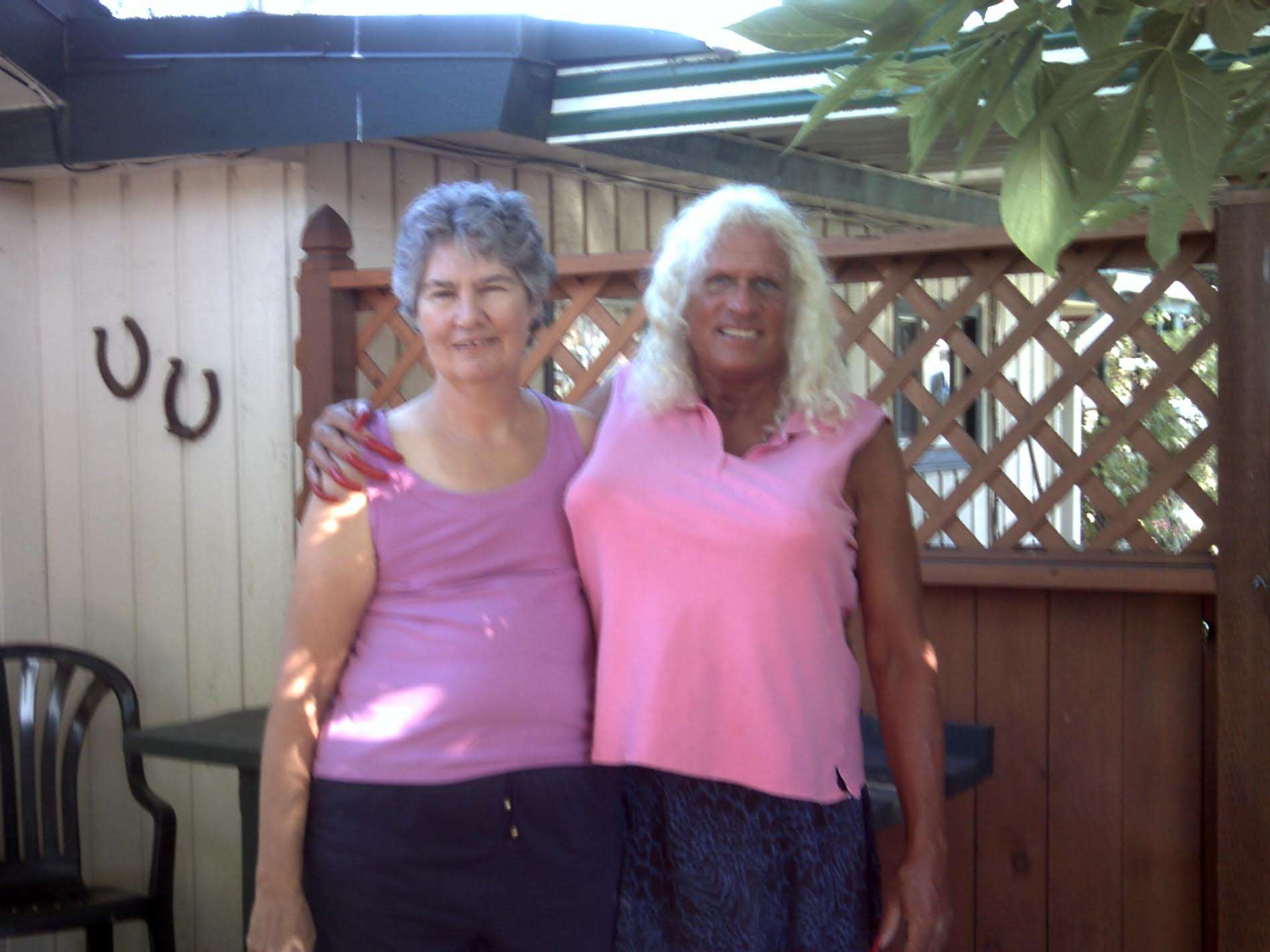
Lette didn’t turn away from the tension.
“That was a point we had to talk about,” Lette said. “I told her that God gave me free will, and God wanted me to be happy.”
Lette and her wife talked about what the transition would mean for their relationship, and Lette assured her wife that she was the same person she had married 55 years ago.
“I told her I really was the same person, and the only thing that changed was a little bit of my outward appearance,” Lette said. “After a while, she realized that was true.”
Lette and her wife, Veronica, are still married.
“When I look at how she dealt with it, I thought I wouldn’t have done it nearly as well as she had,” Lette said, remembering how they worked through the tension.
‘I think she is a good Catholic because she has accepted me for who I am,” Lette said. But, “she’s still against gay marriage.”
Veronica turned down a request for an interview.
Beyond just coming out to her Catholic wife, Lette also came out to her entire parish.
“When I first started going to church dressed as a female, it was scandalous,” Lette said. “They knew me as a man, and all of a sudden here I was being female. I felt like I was treated as a leper. No one would come near me.”
Lette made sure her first day dressing as a woman to church started with a bang, too.
“I wore stockings, and a short skirt, and high heels,” she said. “I was all out fem.”
Although she was anxious, Lette said she wanted people to be upset so they would have to confront their lack of compassion, which she viewed as directly opposed to the character of Jesus.
People shared their opinions of Lette to her face.
“People would come up and tell me I was disgusting. People would say I don’t belong in church because I’m such a bad person,” Lette said.
One day, Lette said the priest called her into his office and told her people were leaving the church because of her, and that he was concerned she would destroy the parish.
Lette remembered telling him that she wasn’t responsible for that.
‘I’m not some kind of monster’
“If these people want to leave the church, that’s their decision,” Lette said. “I’m going to keep coming to church, and the people are going to realize after a time that I’m not some kind of monster.”
Lette said she didn’t grow up religious, but she started going to Catholic church after she married Veronica, who was a staunch Catholic. At first, it didn’t really mean anything to her. But a few years in, she remembered when she decided it was something she wanted, too.
“When I was in my mid 40’s, I was in church one day and I just felt God saying that I should practice my faith. I should put my belief into practice because I really wasn’t,” Lette said. “I was just going to church and not really believing in the words of Jesus.”
After a profound moment where Lette said she felt the presence of God, just like how Moses felt when he saw the burning bush, she decided to officially become Catholic.
After that, Lette said she pored through the Bible and began to see it as affirming of her identity, rather than opposed.
“Jesus never said anything bad about gay people,” Lette said. “He never condemned homosexuals and prostitutes. He was always able to give them a break.”
Beyond that, Lette said there were passages in the Bible — like the description of Jesus’ suffering in Isaiah 50:6-9 — that spoke directly to her experience as a transgender woman.
“I experienced physical harassment, similar experiences to these,” Lette said of the experiences described in Isaiah. “When I read that, I said, ‘Jesus knows what it’s like to be trans.’”
Despite her initial experience in the Catholic Church, Lette stuck by her belief that people in her parish would realize “I’m just a regular person, just like everyone else.”
After about six months of pushing through, she said, that’s exactly what happened.
One day at church she walked in for a social hour of coffee and donuts. One of the elderly women sitting at a table yelled across the room at Lette, inviting her to come sit with the six or seven people at the table.
“We became friends,” Lette said. “They all thought I was OK.”
After that, Lette said she was accepted at St. Thomas More.
“I was accepted because those ladies accepted me,” she said. “I found there are some really great people in the Catholic Church, and they are open-minded.”
Although Lette said she knows the beliefs of the Catholic Church haven’t changed, and neither have the beliefs of the parish, she thinks some individuals have changed because of her presence, and people respect her pronouns.
Even though she is Catholic, she doesn’t agree with the traditional stances on every issue — in addition to differences regarding LGBTQ+ issues, she said she doesn’t agree with the exclusion of women from priesthood and the lack of discussion about racism, discrimination and global warming.
Finding affirmation at United Methodist Church
“The church, I think, was wrong in the way they interpreted a lot of Jesus’ messages,” Lette said. “I believe in the words of Jesus, and when I go to church I hear the words of Jesus, even though the church doesn’t put them into practice the way I think they should.”
She sticks with it for that reason, she said.
“I believe in the words of Jesus,” she said.
Lette has explored other flavors of Christianity, or entirely new religions, as well.
Lette’s best friend is Mary Jo Woods. They met in an exercise class and, over time, got coffee and shared their lives, Woods said.
Woods described herself as a “recovering Catholic” who has been attending Covenant United Methodist, a church that is explicitly affirming. She knew Lette had been attending a Catholic church, and although she said she didn’t know the troubles Lette was going through, she invited her to come to church with her.
Covenant United Methodist is an “open and inclusive congregation,” The Rev. Megan Madsen said, meaning that the church honors and celebrates the identity of God in everyone, including in LGBTQ+ people.
Madsen spoke on behalf of the local congregation, not the overall United Methodist Church, she said.
After a few years after attending Covenant United Methodist, Lette decided to officially join.
Now, Madsen said she is on the rotation of Scripture readers, participates in an adult education group and serves in other capacities.
‘Relationships are the way real change happens’
“I really love the United Methodist Church because they’re so affirming,” Lette said.
Lette has also found support with other LGBTQ+ people through organizations like the LGBTQ+ Seniors of the Inland Northwest — but she knows members of that group that won’t even go to gatherings if they’re held in a church.
“I’m really disappointed in the fact that most queer people hate religion and they won’t go into a church,” Lette said. “The church has poisoned so many people against religion because of the way they treat people.”
“It’s really a shame,” she added. “Christ was very accepting of diversity, but a lot of times the church isn’t.”
Religion is something Lette runs toward, not away from. In addition to Catholicism and United Methodist practices, Lette has also explored Buddhism, believing that many of the morals that Buddhism practices are directly in line with what the Bible preaches.
“I think there’s truth that all religions share,” Lette said. “I found that, when I went out to Methodism and Buddhism, I see so many similarities with Catholicism that I don’t see any conflicts.”
Despite finding religious circles that are more affirming, Lette said she still sticks with St. Thomas More.
“I think the established Catholic Church doesn’t quite have it right when it comes to putting Jesus’ words into practice, but I still go because it’s important, and I might learn something new, and I appreciate getting the blessings,” Lette said.
Plus, if Lette left the Catholic Church, she said she wouldn’t have an opportunity to change people’s minds about LGBTQ+ individuals.
“I think that’s what I appreciate and love about Christine so much is that she is so confident and integrated in who she is as a person, that that isn’t something that is threatening and harmful to her,” Madsen said. “I think that’s an incredibly brave thing that she does.”
Lette said she wants to be a role model for people to interact with, to “present a good image of queer people to the other people in the Catholic Church.”
Often, Madsen said relationships are the way real change happens.
“I think we all have this idea, kind of generally as people in our society, that minds are changed through facts and figures, and that just isn’t the case,” Madsen said. “What we really know to be true is that people’s ideas and minds are changed through relationships with others.”
Lette’s best friend is an example of that idea playing out in real life. Although Woods wasn’t ever against LGBTQ+ issues, she said it “was not an issue that I concerned myself with.”
As Woods began interacting with LGBTQ+ individuals, first through her gay hairdresser and then by watching someone at church transition, it began to matter to her more.
“I was like, ‘this person is a nice person,’” Woods remembered. “‘There’s nothing wrong with this person, and they’re not comfortable being female and want to be a male, why should I have any problem with that?’”
Over time, Woods said she realized the LGBTQ+ population was bigger than she’d known, and very diverse.
‘I stumbled my way through learning the vocabularies’
“I stumbled my way through learning the vocabularies and the vernacular, and still totally make mistakes and have so many questions I want to ask,” Woods said. “Christine has been a very big help explaining that.”
Lette now attends St. Thomas More before heading to Covenant United Methodist right after, she said.
“I get a double dose of church on Sunday,” Lette said.
Even though Lette said she’s certain of the love God has for her and her gender identity, she still has questions.
“I know that, when I die, God is going to give me a female body, and that will make me really happy,” Lette said, but she’s not sure why she didn’t get one in this life. “I’m going to ask God about that when I die.”
She has her theories, however.
“I think that God made me a woman in a man’s body because he loves diversity,” Lette said. “It’s been a way that has really enriched my life and made me much more tolerant of other people’s differences because I’m different, and I want people to be tolerant of me, so I’m tolerant of them.”
Never miss a story. Get the top headlines, breaking news, commentaries, and handpicked favorites delivered straight to your inbox every morning. Subscribe to our quick, free and informative FāVS News Daily Newsletter.


I’m 63 years old I’m secretly a transgender woman I’ve struggled with this issue for many many years I married and I love my wife and I would love to tell her I’m a woman.. I did have counseling 20 years ago, and my therapist strongly suggested that I have a sex change and accept myself as a woman.. I told my mother before she passed last year that I wanted to be a woman, and she was very accepted of it and said she would support me all the way and wanted to be there for me if I was to have this surgery.. my wife does allow me to wear women’s clothes around the house.. there is times I just wanna scream. I’m a woman. Thank you for allowing me to share.