

By Cindy Hval | FāVS News Reporter
Anthony Di Mauro’s journey to Catholicism unfolded gradually.
Raised in an ecumenical family, Di Mauro, the founder of The Relic Project, seeks to highlight the Catholic tradition of relics through the first interactive worldwide map.
“I was born in Yakima and raised in a Mormon/Jewish/Catholic home,” said Di Mauro. “After my parents divorced and I moved to Spokane, I chose Catholicism.”
But choosing and embracing aren’t the same.
“I went to All Saints Catholic School and was confirmed at 13, but I didn’t really know much about my faith,” he said.
In 2017, while attending the Cathedral of Our Lady of Lourdes, he truly began to understand the sacraments and the Eucharist.
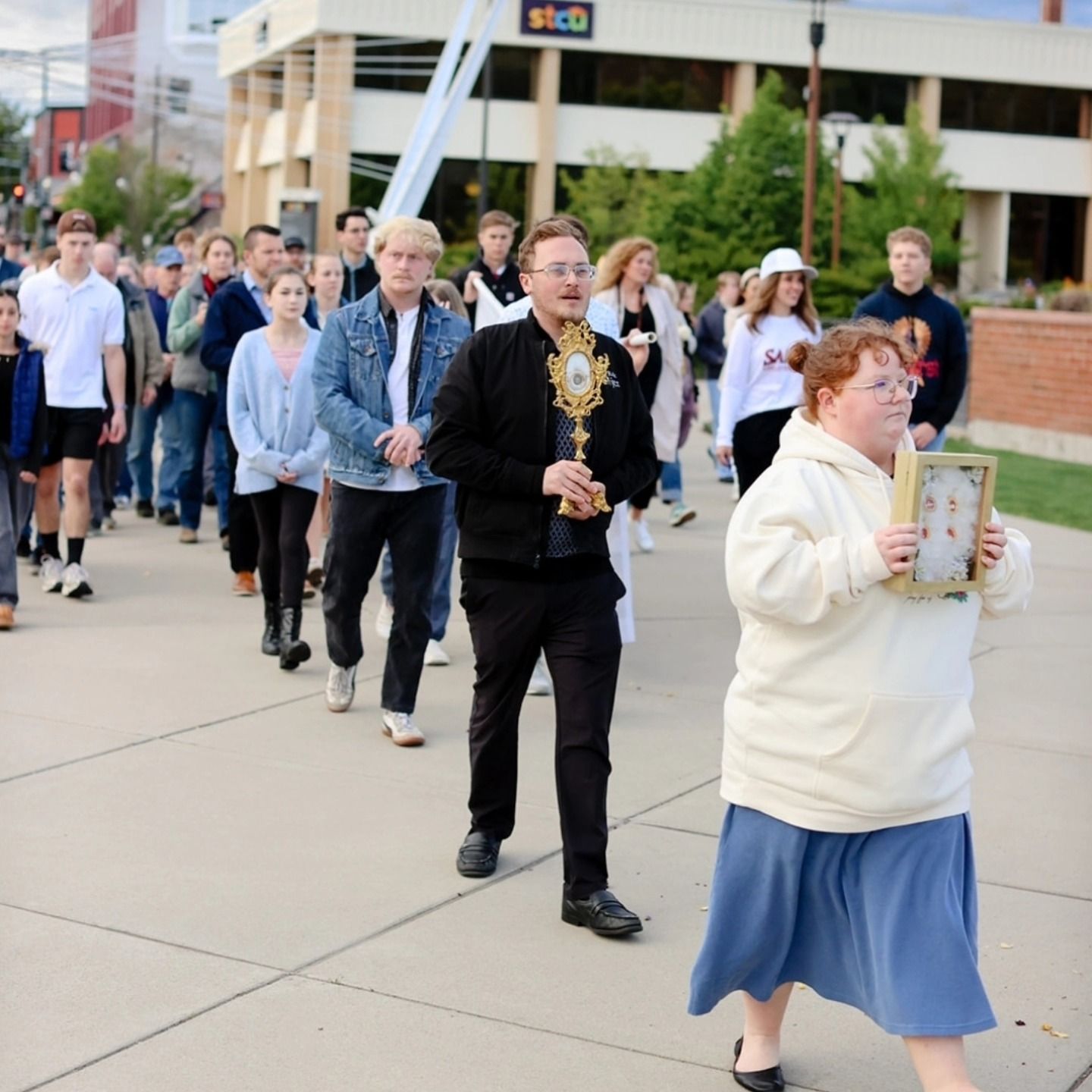
“The liturgy is beautiful, and it really moved me,” he said.
An introduction to relics
Di Mauro first encountered relics in 2020 when the Rev. Carlos Martins brought his Treasures of the Church exhibit to Our Lady of Lourdes. The exhibit is a Vatican ministry utilizing the relics of the saints in healing ministry.
“I knew nothing about relics at the time,” Di Mauro recalled.
In Catholic and Orthodox traditions, relics are small fragments of a holy person’s body (typically those who have been beatified or canonized) or objects that have come into direct contact with it.
At the time a relic is extracted, the Catholic Church prepares a corresponding certificate of authenticity. Both are sealed with the insignia of the ecclesiastical authority. In addition, the relic is often further sealed in a reliquary (ornamental urn or case) to keep it secure and signify its sacredness.
Catholics don’t worship relics; instead, they venerate (give respect to) them. They’re viewed as vessels through which God’s grace can flow. Relics can help individuals and communities connect with and be inspired by the virtues of a particular saint, and they believe that God may use relics to perform miracles.
“Fr. Martins brought 150 relics and shared miracle stories,” Di Mauro said. “There was a piece of thread from the veil of the Virgin Mary — a piece of St. Joseph’s clothing. I’d never seen anything like it. I witnessed people crying. It was very beautiful.”
The experience inspired him.
“God was tugging at my heart to get closer to the saints and the relics,” he said.
Experiencing relics
During an internship at the National Review in New York City, Di Mauro borrowed a relic of Saint Gemma Galgani.
“Relics help you feel closer to God,” he explained. “Traditionally, Catholic churches have relics of martyrs and saints in their altars. God uses them as a way of connecting with his children.”
When he returned to Spokane, he asked a priest at Our Lady of Lourdes if they had relics at the cathedral. Di Mauro was told they had about 50 at the church.
“I borrowed the tunic of Saint Joseph (relic) for a couple of weeks,” said Di Mauro.
When he took students on a wilderness retreat, he borrowed a relic of St. Maria Goretti.
“I felt like my life resonated with hers,” he said.
If the Cathedral of Our Lady of Lourdes had 50 relics, he wondered how many were in other area churches. He asked the diocese archivist, but no one had the answer.
“I told my mom that I think God is calling me to build a map of relics,” he recalled. “She laughed and said, ‘Oh, like Carlo Acutis but for relics?'”
That was exactly what he meant.
Saint Acutis used his computer skills to create a website documenting Eucharistic miracles and became the first millennial saint.
The Relic Project
Following in the footsteps of Saint Acutis, Di Mauro decided to create the world’s first online relic map, but he knew he couldn’t do it alone.
With the permission and endorsement of the Bishop of the Catholic Diocese of Spokane, Washington, in 2024, Di Mauro launched The Relic Project, a 501(c)(3) nonprofit.
Patrick Wolf serves as treasurer on the board of directors. His wife had friends involved with the project.
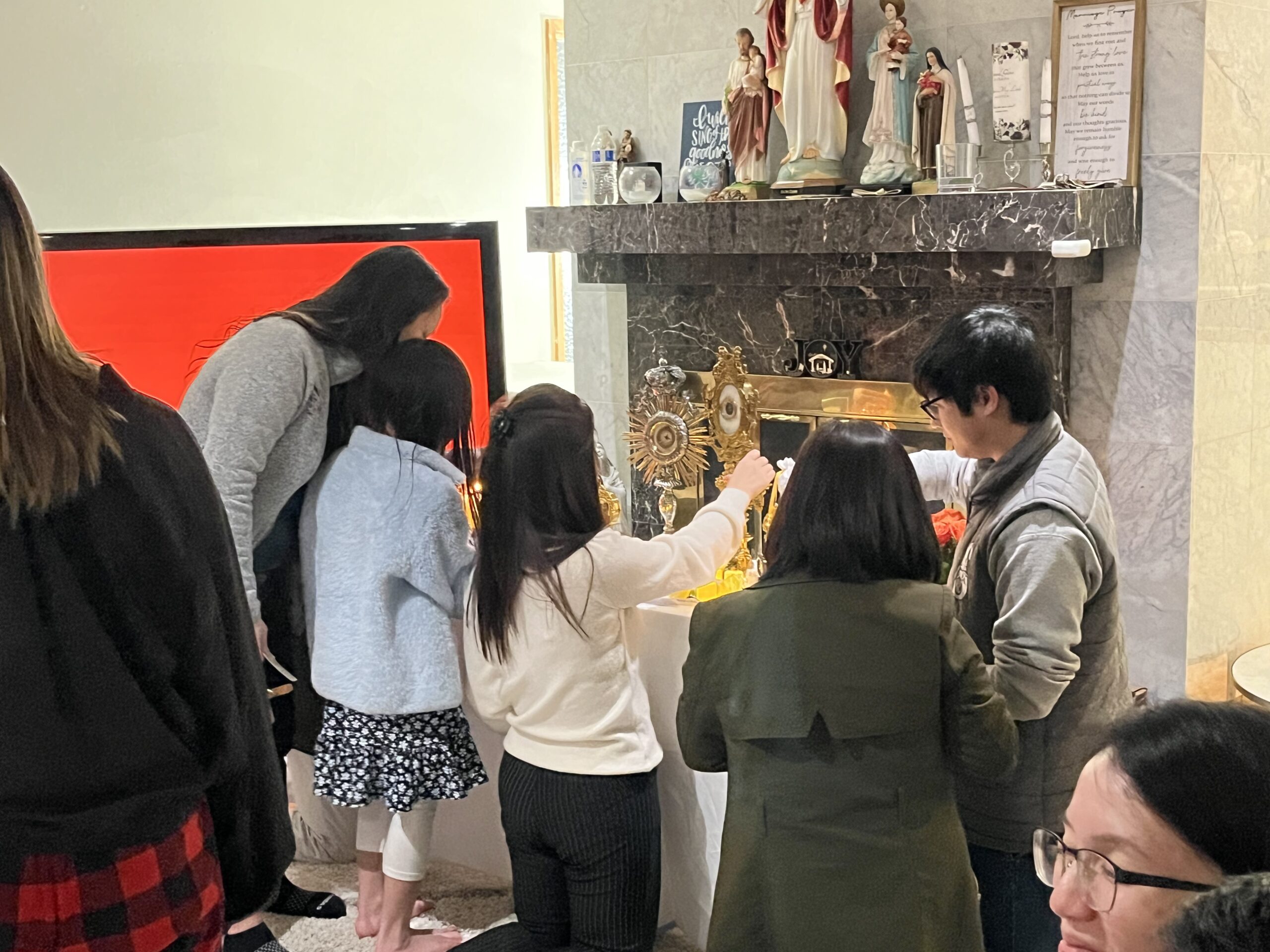
“We had a home visit, and he (Di Mauro) brought eight relics for an evening with the saints,” he said.
Wolf was already familiar with relics.
“My father has a relic of the true cross that was gifted to him many years ago,” said Wolf.
He’s glad to be part of a board tasked with establishing the nonprofit for sustained success.
“The long-term goal is creating a standard practice when it comes to relic care,” said Wolf. “We are just custodians, expanding the saints’ stories and getting them to the general public.”
He believes the history and tradition of relics are important to pass on to future generations.
“The past reaching forward into the present is a beautiful thing,” he said.
Monica Hart agreed.
She met Di Mauro at Our Lady of Lourdes four years ago.
“My husband and I are renovating a historic home,” she said. “We are natural hospitality people, so we hosted The Relic Project kick-off dinner.”
Her first meaningful encounter with a relic occurred while living in Seattle when she was invited to see the relics of Saint Thérèse of Lisieux.
“It was a profound experience,” she said.
The death of Hart’s mother prompted a deeper dive into her faith.
“I’m starting over — learning my Catholic faith from scratch,” she said.
For her, that involves understanding the importance of relics and the lives of the saints.
“A relic isn’t a talisman or rabbit’s foot. It’s something more profound, ancient and beautiful,” she said. “God speaks to us in the language we hear, and if that’s a relic, he will speak to us through it.”
A relic renaissance
The Relic Project continues to grow in scope and size.
“We have a 13-member relic hunting team and three missionaries, one in the Netherlands, one in Post Falls, and one in Florida. Our team is all volunteer — we’re working to get me a salary,” said Di Mauro. “It’s growing fast. God has it in his hands.”
They’ve found hundreds of relics in the Spokane Diocese alone. Currently, they’re building relic cabinets with St. Mary’s parish in Spokane Valley, which has the largest public display in the area.
Part of their mission is to bring relics to homes, hospitals or wherever there’s a need. Those interested can contact The Relic Project and schedule a home visit or invite Di Mauro to do a presentation.
“Growing up, I felt the story of the saints was so distant,” Di Mauro said. “But with the relics there’s a familial closeness — a connection to heaven made tangible.”
Connect with The Relic Project on Instagram at the.relicproject, on Facebook at The Relic Project or online at therelicproject.org.
FāVS News uses professional journalists and thoughtful commentary to explore faith, values and ethics. Support journalism like this by making a tax-deductible donation. FāVS is a 501(c)(3) nonprofit. © FāVS News. All rights reserved. Reproduction permitted only to authorized media partners or with written permission.

