

Escaping the Cult of ‘Sin-nocence’
Commentary by Paul Graves
We’ve just entered the four-week period called Advent, the time when the Christian church prepares for the birth of God (the baby Jesus). Underlying that birth for many people is the concept we call “innocence.”
Jesus’ “innocence” is usually connected to his being “without sin.” But what if Jesus wasn’t innocent in that way? What if Jesus wasn’t innocent at all? What if being fully human and fully divine (and being a key word here) meant Jesus was as un-innocent as we are?
In an August, 2022, Daily Meditation, Father Richard Rohr reminded his readers: “The Latin word innocens means ‘unwounded.’ Here we worship a wounded man … and yet much of our moral concentration is on proving we’re not wounded, we’re not wrong, we’re not at all bad, we are not unworthy.”
Have you considered that Jesus was born into our world wounded, just like you and I were? After all, God had been seen for centuries as “wounded.” (Example: God was “wounded by love” when Israel continually disrespected their covenant with God. Yet God’s stubborn love upheld that same covenant.) Why would we not expect God’s son to carry the genes of woundedness into this world?
There’s a deep irony in Rohr’s affirmation. While we follow a wounded man, we let our deepest fears drive us to deny our own woundedness. We’ve been brainwashed to believe being wounded means we’re not worthy of being loved by God or anyone else.
So we work overtime to pretend we are innocent (unwounded). This seduces us into membership in a variety of “cults of innocents.” There are groups of many kinds (and/or destructive attitudes) that blind us with delusions of purity, of superiority, even supremacy over other people.
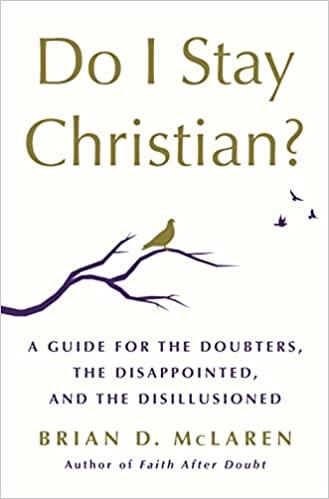
Brian McLaren borrowed “cult of innocence” from Nadia Bolz-Weber, then spoke with brutal honesty about this cult in his most recent book, “Do I Stay Christian?: A Guide for the Doubters, the Disappointed, and the Disillusioned.”
McLaren suggests if Christianity is primarily a pathway to innocence/purity, then its intent is to separate the clean from the unclean. Millions of Christians think allegiance to Jesus and/or the church will put them on a train to heaven; while others not so blessed are headed to hell.
This Christianity becomes a religion of “separation, superiority, and exclusion.” Did you remember that one definition of “sin” is “separation”? So perhaps we’re actually talking about a “cult of sin-nocence.” That portmanteau might describe the cult better.
Yes, Jesus was born into a world where people were separated by economics, class and religion. Some people were convinced they were superior to others. Some people were cruelly excluded in countless ways.
But that wasn’t how God intended people to treat each other. That certainly wasn’t how Jesus is portrayed in the Gospels. Nor reflected in Christians today when we are at our best.
But too often, we are hyper-proficient in projecting our own inner woundedness onto others. Maybe we unconsciously don’t want others to feel innocent when we feel so wounded ourselves.
So we join ourselves up with a “cult of sin-nocence” to justify our sense of being unworthy by attacking others with our judgment of their unworthiness. Political, religious, social unworthiness seems in vogue in our American culture. We fight it — or wallow in it — seemingly every day.
But there are ways to escape living in a cult of sin-nocence where all we can do is pretend we are unwounded. McLaren identifies one way briefly: “You stop seeking innocence through separation. Instead, you seek love through solidarity.”
The love-through-solidarity thing simply involves hanging out with other people (not always Christians, either) who better understand that love draws out the best in our humanness.
I’m for that.

