

Listen to the audio version of this article (generated by AI).
Seattle Catholics find a ‘revival’ of justice organizing in migrant solidarity campaign
Leaders say over 950 Catholics gathered during an eight month season of events to stand with migrants in western Washington.
By Cory Johnson | FāVS News Reporter
SEATTLE — Catholic leaders in western Washington say they feel a wave of energy in the church as hundreds of parishioners have continued to gather in public displays of faith and solidarity of migrants over the past eight months.
Anna Robertson works as an organizing director at Discerning Deacons, a nonprofit that supports the Catholic Church’s discernment to ordain women as deacons. She heard about immigration raids in cities like Chicago, Los Angeles and Minneapolis, along with accounts of non-violent protests and mutual aid to protect people of color, and felt called to act.
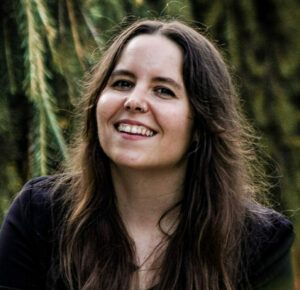
“I was so moved, seeing the Catholic response — this prayerful, unified defense of human dignity. I felt inspired. I felt challenged,” Robertson said. “And I thought ‘Wow, if things get a lot worse here in Seattle, are we ready?’ Do we have the organizations and people to be able to respond in this powerful and important way?”
Using faith for good
A number of organizations in western Washington, like Discerning Deacons and the Intercommunity Peace & Justice Center, had been working for years to prepare Catholics to use their faith to advocate for good. But a number of local leaders thought the increasing acts of violence toward migrants required a unified, public response.
“The church is quite clear on our defense of migrants. Migrants are the backbone of the church,” Robertson said. “The church does not stand for the separation of families or detention of migrants without due process, but it takes intentional organizing to communicate that position in a powerful way that can actually impact public policy.”
So a group came together to plan a series of events throughout the region that would show solidarity for migrants and give people of faith a sense of purpose and place to demonstrate their belief in a God that welcomes and dignifies all people.
From November through May, 950 Catholics and allies showed up at events throughout the Puget Sound. A candlelight vigil in a downpour outside Seattle’s federal courthouse told detained migrants that when one member of the Body of Christ suffers, all believers suffer.
A Stations of the Cross event during Holy Week offered an invitation to see Jesus clearly in the immigrant experience. The stations related Jesus’ story of being condemned, falling under the weight of the cross, stripped of dignity and ultimately crucified to stories of modern migrants in the community forced to leave their homes, to live in uncertainty and to prove that they are worthy of existing. One station asked: ““How many people in our community carry crosses of displacement, deportation, detention, disenfranchisement, forced assimilation, isolation, hiding, and unfair labor?”
Need for the church to challenge injustice
The walk through Seattle’s Beacon Hill neighborhood intentionally honored the resilience and courage of immigrant communities, past and present. Speakers shared examples of injustice growing stronger when it remains unchallenged, stemming from Indigenous displacement to redlining, Japanese‑American incarceration and gentrification that has shaped the area.
Volunteers served in typical liturgical roles as readers and musicians but also as medics and crossing guards to protect the group on their journey.
“We know there’s people in our community that don’t feel comfortable right now to be out in these public spaces. So it’s even more important for those of us that can do so safely to gather and show solidarity for our brothers and sisters,” said Annie Nieto Bailey, a member of Seattle’s organizing committee. “Maybe we don’t have control over a lot of things but we can still show radical love through our actions and solidarity and prayer.”
As president of LaRED, a national nonprofit supporting Hispanic youth and young adult ministers, Nieto Bailey also helped guide the larger national Season of Faithful Witness. A coalition of Catholic leaders published toolkits and hosted trainings for communities across the country to discern how they could respond to injustice through public, prayerful action.
Locally, church leaders also hosted webinars on the ministries of hospitality and accompaniment of migrants that parishioners are invited to be a part of in the region.
The season ended with Mass at St. Leo’s Parish in Tacoma followed by a Eucharistic procession where 450 people walked in prayer to the Northwest Detention Center to denounce “dehumanizing immigration practices” and bring a message of dignity, compassion and belonging to the detained migrants.

Leaders say the procession was deeply moving, especially for those who have wrestled with their Catholic identity while searching for how to respond to mass detentions and deportations. Nieto Bailey said she attended with her children to show them what the church can be at its best: a community that does justice, loves mercy and transforms prisons into holy ground.
‘A church my children can be proud of’
“It almost broke my heart. How do you explain to your young kids what’s happening around us and what our role is as people of faith to respond? That was really hard. I just prayed for the Holy Spirit to give me the right words,” Nieto Bailey said. “My hope is to continue building the church that is prophetic, that brings light and healing to places of hurt and suffering — a church that my children can be proud of.”
The leaders are not focused solely on changing vast systems through their work. They want to break the feelings of isolation and paralysis when individuals face oppression on their own. They see their work as walking together to become a people of God.
While this season of action is over, organizers think the relationships formed in the community gatherings will continue to yield new opportunities for lay leaders in the church — especially migrants, women, LGBTQ+ and people of color — to respond to the signs of the times and be empowered to work for justice on all levels.
“There’s this sense in many faith spaces that we should disavow power, but Jesus was actually very powerful. It was power for good. It wasn’t power for self-aggrandizement. If the only people in the world who are seeking power are those who want to do ill with it, then we’re not going to be in a great position,” Robertson said. “I think we’re seeing a revival of interest in the U.S. church to organize and use our power for good.”
Puget Sound leaders will reconvene this month to decide how to continue leading the local Church to respond to the community’s most pressing needs. The national organizers at Catholics in Communion will launch a new campaign for communities to organize around faithful citizenship and elections safety and detention center witness support later this summer.
FāVS News uses professional journalists and thoughtful commentary to explore faith, values and ethics. Support journalism like this by making a tax-deductible donation. FāVS is a 501(c)(3) nonprofit. © FāVS News. All rights reserved. Reproduction permitted only to authorized media partners or with written permission.

