

By Cassy Benefield | FāVS News Reporter
UPDATED: The story has been updated to the correct spelling of Taylor Telford’s name and to clarify that Steven Lympus’ Side B view is based on sex difference not sexual orientation.
Two queer Christians with Spokane-area roots have turned their friendship across theological differences into a chapter for a new anthology on sexuality and faith.
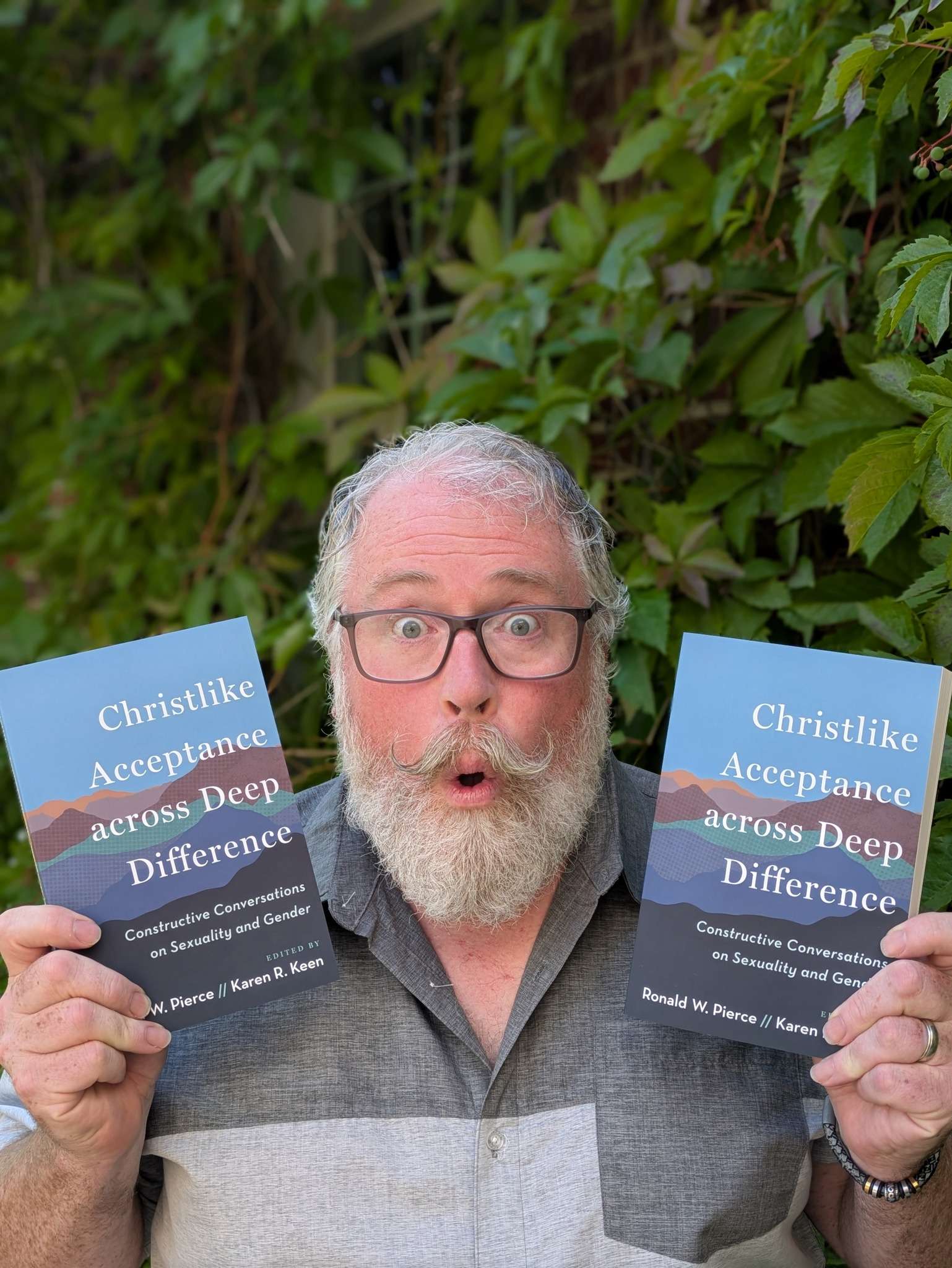
Taylor Telford and Steven Lympus co-authored a piece for “Christlike Acceptance across Deep Differences: Constructive Conversations on Sexuality and Gender,” showing how they maintain friendship despite opposing views on biblical marriage.
Released in August, the book held the No. 1 spot in New Releases in Gender & Sexuality in Religious Studies on Amazon for about three weeks. It features over 20 writers who are experts in these areas either through lived experience or fields of study or both.
Telford, a theologian and adjunct Whitworth professor and Lympus, former Shadle Presbyterian pastor, are two of them. Their chapter “Loving through Difference: Navigating Side A/B Friendship” highlights how two gay Christians can be friends through differing views of biblical marriage.
Telford holds a ‘Side A’ position, meaning she affirms same-sex marriage as biblically acceptable. Lympus takes a ‘Side B’ stance, believing the Bible restricts marriage to one woman and one man.
They show how their friendship rests on their shared experience of coming out as gay Christians and the desire for each others’ good.
“Steven and I agree on a lot more than we disagree,” Telford said.
Both share core Christian beliefs — that Jesus is their Lord and savior and that they’re accountable to Christ, Telford said. They also believe their differing theological views can help build up each other and the broader church, particularly other gay Christians.
“We are both for the flourishing of queer people,” Lympus said. “We both want the church to be a good place for queer Christians, and it isn’t always a good place for us.”
The book’s Co-editor Ronald Pierce — professor emeritus at Talbot School of Theology at Biola University — has seen people like Telford and Lympus get hurt by Christians over the years. He believes the battle in the church over LGBTQ+ issues not only damages people who identify as such, but also the Christian witness in the world.
A witness amid division
“We are failing to show the love of Christ to each other, let alone to those outside the church,” he said. “Many of us want to do something about this, but are afraid of compromising our convictions about the authority of Scripture. This book provides hope and a way forward.”
The collection of essays are broken up in three sections. The first part is going beyond the proof texts or “clobber passages” in the Bible about homosexuality and taking a look at the Bible as a whole unit. The second section includes chapters on how Christians can love God and one another and keep their deeply held convictions on gender and sexuality. The final division aims to help Christians minister to LGBTQ+ people, their families and their friends.
Other authors include Justin Lee, David Bennett, Eve Tushnett, Mark Yarhouse, Amie Scott and Staci Frenes, all of whom share different conclusions about what the Bible teaches about biblical marriage and gender.
Telford’s journey to affirmation
Telford didn’t always hold an affirming view of biblical marriage. Now, she believes the Bible makes room for marriage between people of any sex and gender. Her theological leaning this way began to develop while she attended seminary and encountered queer and affirming Christians who were open about it “because of how they read the Bible” (emphasis hers).
“[I] sensed the Holy Spirit inviting me to be open, to recognize that my commitment to celibacy was about control and not about faith — a simple invitation to trust, be curious, and be open to God in this aspect of my life,” Telford writes in the book.
Lympus, now an executive director and college house dad with his wife and children at The Alpha Omega House in Missoula, Montana, sees the Bible point to marriage as between a man and a woman. He writes that he knew he was gay early in life and remembers “rage-crying” for God to make him straight.
“I read Christian comic tracts that showed gay men holding hands and gay men protesting and gay men getting married, all with deeply pained faces,” he writes. “The last frame showed a giant faceless God on the throne of judgement, sending a lonely little gay man into the burning agony of hell.”
Unlike Telford, Lympus didn’t have the advantage of gay Christians living out their identities fully gay and Christian, within a specific biblical conviction. He did, however, become one of those pioneers for others, as a Christian gay man called to marriage with a woman and children within a traditionalist biblical understanding. FāVS wrote more about Lympus’ story here.
Love without agreement
Together, Telford and Lympus’ chapter represents yet another path forward for current and future Christians — one not well traveled in the current cultural moment. They believe they can love one another, learn from each other’s different views and still be friends and siblings in Christ.
Telford believes doing this shows a witness to the world that is “fundamentally Christian.”

“My hope is that it would be a meaningful and poignant witness to what it means to live out Christ’s love amidst disagreement,” she said. “Particularly in a world and culture that capitalizes on dividing people.”
Lympus aims to show that to love someone does not mean you have to agree with them on all things.
“There’s this spirit in the air of ‘If I’m going to love you, you have to agree with me … like we have to agree on everything and then maybe be in a relationship,’” Lympus said. “My hope would be that people could see [our relationship] and go, ‘Oh, OK, sometimes a relationship or a friendship can be stronger because we find loving ways to disagree well and not ignore the disagreement.’”
Editors Pierce, who is straight, and Karen Keen, who is gay, both of whom are evangelical Christians, believe Telford and Lympus’ friendship is one example of many in their book of a third way Christians across the LGBTQ+ debate on the issues can walk together. Pierce defines this third way as a “theology of Christlike acceptance.”
The book is a roadmap upon which evangelicals can use to travel together and share their contrasting biblical convictions on marriage and gender in kindness, care and respect through what the editors call “clarity and charity.”
“The debate over sexuality and gender so far has been 90% about clarity and 10% about charity,” the editors write in the book’s introduction. “This book seeks to bring greater balance by focusing on charity without sacrificing clarity.”


Thanks, Cassy. In these divisive times, we need to hear reports like yours on how people with differing perspectives can still respect each other. Your report also reveals how Bible believers can interpret the Bible differently, which is certainly true.
Old Testament Views on Queer Marriage and Same-Sex Relations
The Old Testament (also known as the Hebrew Bible) does not explicitly discuss “queer marriage” or same-sex marriage in the modern sense, as marriage in ancient Israelite culture was primarily a social and familial institution focused on procreation, inheritance, and alliances between heterosexual couples. However, it contains passages that prohibit same-sex sexual activity, particularly between men, which have been interpreted by many scholars and religious traditions as implying no approval for same-sex unions. These prohibitions are framed within broader laws on sexual morality, ritual purity, and holiness codes.
Key passages include:
– **Leviticus 18:22**: “You shall not lie with a male as with a woman; it is an abomination.” This is part of the Holiness Code, listing forbidden sexual practices, often seen as condemning male same-sex intercourse. Some interpretations suggest this may refer specifically to idolatrous or incestuous contexts rather than consensual relationships.
– **Leviticus 20:13**: “If a man lies with a male as with a woman, both of them have committed an abomination; they shall surely be put to death.” This reinforces the earlier prohibition and prescribes capital punishment, highlighting the severity in the ancient legal context. Progressive scholars argue this targets exploitative acts, not modern loving partnerships.
– **Genesis 19 (Sodom and Gomorrah)**: The story of the destruction of Sodom is sometimes cited as condemning homosexuality, based on the attempted gang rape of male visitors by the city’s men. However, many argue the primary sin here is inhospitality, violence, or pride, not consensual same-sex relations (as referenced in Ezekiel 16:49 and Jude 1:7 in the New Testament).
Overall, traditional interpretations view these texts as categorically opposing same-sex activity, with no framework for queer marriage. More contextual readings emphasize that these laws were part of ancient purity rituals and may not directly apply to contemporary ethics.
### New Testament Views on Queer Marriage and Same-Sex Relations
The New Testament also lacks direct references to same-sex marriage, as the concept of marriage equality wasn’t part of the first-century Greco-Roman or Jewish world. Jesus and the apostles focus on heterosexual marriage as the norm, drawing from Genesis, while several passages address same-sex behavior in negative terms. These are often linked to broader discussions of sexual immorality, idolatry, and living according to God’s design.
Key passages include:
– **Romans 1:26-27**: Paul describes same-sex relations (both male and female) as “unnatural” and a result of idolatry: “For this reason God gave them up to dishonorable passions. Their women exchanged natural relations for those that are contrary to nature; and the men likewise gave up natural relations with women and were consumed with passion for one another.” This is seen as a broad condemnation of homosexual acts. Some scholars interpret it as referring to exploitative practices like pederasty or temple prostitution, not mutual relationships.
– **1 Corinthians 6:9-10**: “Or do you not know that the unrighteous will not inherit the kingdom of God? Do not be deceived: neither the sexually immoral, nor idolaters, nor adulterers, nor men who practice homosexuality…” The Greek term *arsenokoitai* (often translated as “homosexuals” or “men who have sex with men”) is debated; it may echo Leviticus and refer to active participants in male same-sex acts.
– **1 Timothy 1:10**: Similar to Corinthians, listing *arsenokoitai* among lawbreakers, reinforcing the idea of sexual immorality.
– **Matthew 19:4-6 (Jesus’ teaching)**: Jesus affirms marriage as between a man and a woman: “Have you not read that he who created them from the beginning made them male and female… Therefore a man shall leave his father and his mother and hold fast to his wife.” While not directly addressing homosexuality, this is often cited as upholding a heterosexual model for marriage. Notably, Jesus does not explicitly condemn same-sex relations, and his emphasis on love, mercy, and inclusion (e.g., Matthew 22:39) is highlighted by affirming Christians.
Conservative views hold that the New Testament maintains the Old Testament’s prohibitions, seeing same-sex activity as sinful and incompatible with Christian marriage. Progressive interpretations argue these texts address specific cultural issues like pagan rituals or abuse, not committed queer relationships, and emphasize themes of equality in Christ (e.g., Galatians 3:28: “There is neither… male nor female”).
In summary, both testaments present a traditional view that does not endorse queer marriage, rooted in prohibitions against same-sex acts, but interpretations vary widely based on historical, cultural, and theological lenses. For deeper study, consulting biblical scholars or translations like the ESV or NIV is recommended.
It all become HATE THE SIN, LOVE THE SINNER