

By Megan Guido | FāVS News Reporter
A Liberty Lake author who has traveled the world argues that meaningful journeys require more than quick stops at tourist sites — they demand extended stays, open minds and a willingness to be transformed.
In her new book “52 Global Reflections: A Pilgrim’s Travel Memoir,” released earlier this year, Susie Leonard Weller invites travelers to consider immersing themselves in a country or location with an extended stay in one place — at least a week. Weller says a pilgrim is curious and open to new ways of living.
Those who have been privileged to travel to countries around the world may consider themselves visitors or tourists but seldom think of themselves as pilgrims. Pilgrimage implies staying at a place for a longer period of time, to commit to stop, speak less, listen more and appreciate differences. It requires more than a 24-hour stop somewhere on the map. Most travelers bounce from one location to another in a quest to see and do as much as possible.
Weller provides the tools to turn travels into a transformational journey. She provides powerful questions and her own reflections organized into the four seasons of life through the Celtic calendar and 13 different worldwide sacred shrines, memorials and labyrinths describing her own developmental stages of life.
From tourist to pilgrim
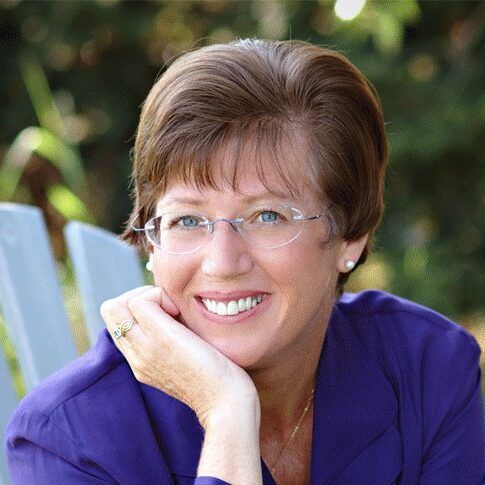
“Pilgrims are not just trekkers,” Weller said in a recent interview. “Pilgrims choose to explore a new place geographically and interiorly with their minds, hearts and spirits. They are open to discovering fresh insights from visiting new locations and interacting with diverse people and cultures.”
She said Catholic priest the Rev. Henri Nouwen calls it “voluntary displacement.”
“When we choose to put ourselves in a different place, it changes our world,” Weller said.
Weller was encouraged at a young age by her mother to travel to learn new cultures. In her reflection of her youth (the season of spring and early childhood), she relays one misbegotten adventure when her mother said she was to fly to Hawaii to visit her long-lost relatives. When she arrived there, however, her relatives rejected her, and she ended up sleeping on the beach for several nights.
She found freedom from her mother who suffered from mental illness when she went to University of California Santa Barbara. Even before then, she sought adventure. Growing up Catholic and graduating from a Catholic high school, she left home at 18 to fly to New York to meet 45 other participants who she joined for an 11-week “Summer in Kibbutz” program.
A lifetime of transformational journeys
“As the only Christian and non-Jewish participant on the trip, I felt curious to learn more about the Holy Land,” she writes. “Within the same week, I flew to New York City to meet 45 other participants who were joining me for an 11-week “Summer in Kibbutz” program. As the only Christian and non-Jewish participant on the trip, I felt curious to learn more about the Holy Land.”
From that early experience as a young woman, she prioritized or found opportunities for the rest of her life to be a global pilgrim. She also found time to be a mother to her son and daughter, to write and work with children.
Weller believes that travel and reflection can help people heal and learn the lessons or skills they may not have acquired in a previous developmental stage. She provides examples of her own developmental growth as it relates to the places she has been a pilgrim, expressing the lessons, values and qualities she learned and found in each of these spaces. These include patience, silence, commitment, diversity, exploration, faith, adventure, beauty and remembrance.
As a 24-year-old, she stayed in Taize, France, which houses a Christian ecumenical monastic community where many young people, 18 to 35, congregate for a sacred experience. She writes, “The monks guided us in simple, repetitive chants, which helped to bridge the language barrier. In contrast to my typically noisy interior life, the meditative music created an atmosphere that amplified deep reflection, enhanced by communal silence. Singing in other languages reminded me I was meditating as part of a global village. While repeating the simple chanting phrases 10-15 times, my breathing slowed, and my body relaxed into a contemplative state. I felt inspired and nurtured by these communal times for contemplative prayer with other young people.”
She also reflects on her two visits to Germany during her life when she visited a concentration camp for Jews built by the Nazis in World War II.
“While staying in a youth hostel in Munich in 1978, I took a train to visit Dachau. I felt shocked to discover both locations were less than 19 miles apart. The small town of Dachau is only a few miles outside the concentration camp. It would have been impossible to have ignored the stench of burning flesh.”
Winter season brings new perspective
Reflecting on the quality of remembrance, she writes:
“Until the 1970s, it was a taboo topic for many German educators to teach children any negative information about their history, especially the Nazi regime. Since then, teaching about the Nazi rise to power and the Holocaust is now a mandatory part of the curriculum taught in the 10th grade in all German schools. As part of their education, almost all students have visited a concentration camp, a Holocaust memorial or a museum documenting this painful era. Although it is uncomfortable for any nation to face and acknowledge past injustices and prejudices, I am inspired by German educators who are willing to teach children to learn from their collective history. Trauma heals more easily whenever an offender(s) fully accepts responsibility for their actions without minimizing their impact, avoids justifying their behavior, and commits to finding ways to make amends.”
As Cindy Hval, Spokane author and columnist, writes about Weller on her blog, “In a world divided by politics, ideologies and religion, Weller’s experiences offer much-needed hope.”
Weller now finds herself in the winter season of her life. She started her book when she was 70 and had suffered from a mini-stroke. It took her two years to write it.
“The chance of me having a severe hemorrhage was high,” she said.
Since then she has had to face side effects from a brain surgery including dizziness, balance issues, short-term memory loss and neuropathy. Her husband has made their home in Liberty Lake ADA-compliant in anticipation she may need to use a wheelchair.
“I’m definitely in the elderhood/winter stage of life,” she said. “It’s about letting go and protecting future seeds. I ask myself ‘What can I release, emotionally, spiritually?’ It’s not easy.”
She is looking forward to becoming a first-time grandmother in January and hopes this book leaves a legacy for her family, children and grandchildren.
“I wanted to provide information about myself for future generations and to help heal generational misunderstandings and trauma,” she said.
Weller also hopes the book will inspire people to become a travel pilgrim. She invites them to reflect on both their inward journey as a person but also their outward journey to explore new opportunities to see the world differently.
“It’s inviting you to become a world citizen, not just a United States citizen,” she said. “We need to start collaborating with people who we once defined as our enemies but who must now become our allies in this fight for common humanity.”
Never miss a story. Get the top headlines, breaking news, commentaries, and handpicked favorites delivered straight to your inbox every morning. Subscribe to our quick, free and informative FāVS News Daily Newsletter.

