

Listen to the audio version of this article (generated by AI).
Christian nationalism debate draws 900 to Christ Church’s Grace Agenda conference
A Moscow, Idaho, forum brought competing visions for America’s future into focus, sparking debate over faith, government, immigration and religious diversity.
By Cassy Benefield | FāVS News Associate Editor
MOSCOW, Idaho — The year is 2099, and the United States is broken into several regional nations. One of them is made up of 75% “church-going evangelical Protestants” along with a number of conservative Catholics, Mormons and Jews. What should that nation’s government look like, and who will be invited to decide?
This was the foundation of the first ever live debate — titled “Which Way America?” — held in tandem with Christ Church’s annual Grace Agenda conference in Moscow, Idaho, Friday morning. This was the 10th such conference hosted by Christ Church.

Albert Mohler, Doug Wilson, Paul Miller and Joe Rigney each received 15 minutes to speak on a particular topic, while Jared Longshore moderated the debate. Wilson is the senior pastor of Christ Church, and Rigney and Longshore, are both fellows of Theology at New Saint Andrews College and Christ Church associate pastors.
Mohler, the president of The Southern Baptist Theological Seminary and a leading voice in conservative evangelicalism, and Miller, a professor of international affairs at Georgetown University and former White House staffer for Presidents George W. Bush and Barack Obama, were the two non-Christ Church speakers.
R.R. Reno was meant to be the fifth speaker and another non-Christ Church speaker who represented the Catholic voice among the four Protestants. He was unable to attend, Wilson said.
About 900 people listened to nearly three hours of arguments based on this “what if” scenario as these men debated if and how Christian nationalism should be implemented in America and if a moral society requires an explicit Christian foundation. Miller stood in as the lone critic against Christian nationalism.
The debate coincided with the latest Canon Press publication, “The Five Views of Christian Nationalism,” a reading of the debaters’ views on the topic, which was edited by Rigney.
How the authors were chosen
Wilson is the initial founder of Canon Press, which is now a privately-owned, for-profit publishing house. He said the book and the debate is meant to counter the “definitional pandemonium” behind what the term Christian nationalism means.
“There are people — moderate conservatives to hard leftists — who basically [say] Christian nationalism is anything they don’t like. If it’s conservative and it’s to the right of me, then it’s Christian nationalism,” Wilson said, adding his view of the term is also distinguished from those who mix in “Jew hate and bad attitudes toward women.
“We think that there are variations of flavors within the acceptable range of those who call themselves Christian nationalists,” he said, which includes himself and three others in the “Five Views” book.
While they represent different theological traditions, Wilson’s “acceptable” Christian nationalists in the debate were himself, Rigney and Mohler. They claim to share the conviction that the state must acknowledge, in varying ways, the Lordship of Christ and the Bible as a basis for its laws to prevent civilizational collapse.
Those on the side of Christian nationalism included two Reformed Presbyterians, Rigney and Wilson; one Baptist, Mohler; and one Catholic, Reno. Wilson said they all arrive at their definitions differently with varying conclusions but within his idea of the “acceptable range.”
At the start of the project, which Wilson gives Rigney credit for organizing, Canon Press had a “surprisingly harder” time getting critical voices onboard, Wilson said.
Miller, who wrote “The Religion of American Greatness: What’s Wrong with Christian Nationalism,” agreed to the project, but he said he understands why many critics might have been reticent.
“If someone wants to hear me talk, I generally feel an obligation (and a joy) to speak,” Miller said in an email before the conference. “That is not to imply that everyone should feel the same — there are legitimate reasons not to engage — but given my position as a scholar and vocal critic of Christian nationalism, it would seem that I’m the designated spokesman for this viewpoint, and I’m comfortable with that role.
Seeds of America’s failure in the original documents
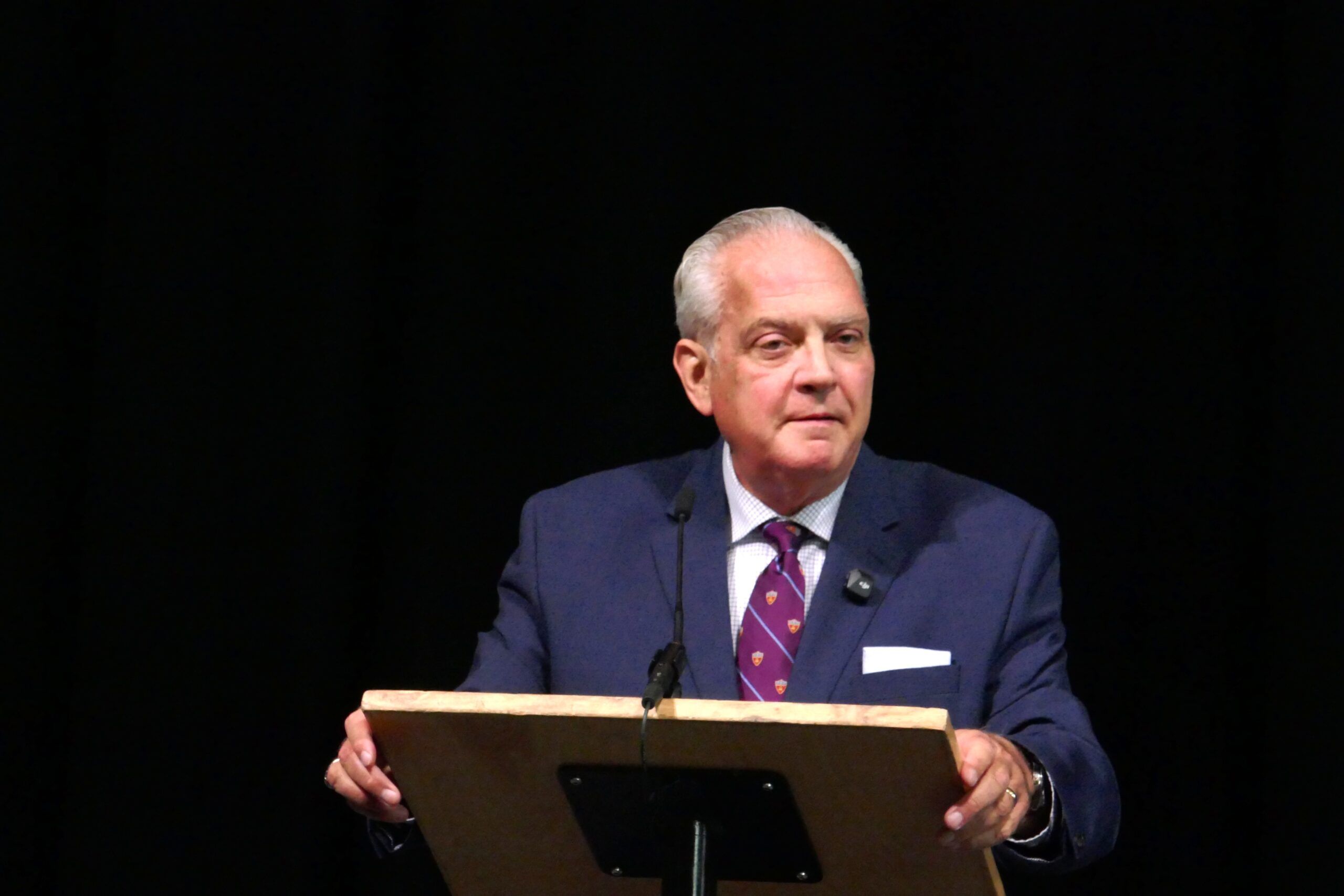
Mohler argued the framers made a mistake keeping God out of the U.S. Constitution, which he said currently makes the basis of America’s laws based on whatever the courts decide.
“I believe that in the Declaration of Independence there is an acknowledgment of that ontological basis that has had a basis in reality that is beyond earthly reality and so endowed by their creator with certain inalienable rights. That language is missing from the U.S. Constitution,” Mohler said.
The American experiment is currently in a “tragic” state, he said, offering as examples the confusion about the definition of male and female and the acceptability of same-sex marriage.
The fertilizer of America’s decline
Wilson argued that up until World War II, America had a broad Christian consensus.
“We knew where it came from. We appealed to it. We talked about it. It was part of our educational system. It was instilled even in the public schools,” Wilson said, adding Catholics formed their parochial school systems, “not because the public schools were secular, but because they were Protestant.”

He used the example of Southern Presbyterian pastor and theologian Robert Lewis Dabney as a “seer” who understood what would happen if a public school system was established.
“Dabney … said Christians must prepare themselves for the following results: all Bibles, catechisms and prayers will ultimately be driven out of schools,” Wilson explained. What he failed to mention, however, was Dabney was also what one writer described a “virulent” white supremacist.
Still, Wilson continued to connect the thread into current events.
“We have forgotten how far our apostasy has taken us. And this ties in with the issue of immigration. We’ve lost our bearings. We … can’t maintain borders and can’t maintain distinctions and can’t maintain definitions. We don’t know what a woman is anymore. All and all of this is connected,” he explained.
Blooms of America’s failure in the present
Rigney used his time to illustrate that all illegal immigrants in the U.S. today count as an “invasion” who must all be deported.
He also argued “religious diversity is destructive” and claimed that Islamic and Hindu immigration erodes America’s Christian core and leads to “national balkanization” — which he defines as the fragmentation of the United States into competing, hostile tribes due to mass immigration and a lack of shared cultural and religious commonality.

Rigney characterized the present day as being ruled by “foreigners and sojourners,” which was a biblical curse that fell on Israel for their disobedience to God. He said he sees the mass legal and illegal immigration as America’s curse for her disobedience. In addition, he characterized the “left” as creating massive “vote farms” through NGOs and welfare and healthcare entitlements in order to keep their power.
“It basically turns the welfare state into a slush fund to reward democratic client groups,” Rigney said, later adding “the left” will go to extremes to keep this power. “The left has made it clear that they will fight to the death. People die resisting and protesting against ICE in Minnesota to maintain their path to political power,” he said.
The future soil is still rich in pluralistic hope
Miller said he still believes in the American experiment and did not share the fearful pessimism of the Christian nationalists — despite their vocal optimism of being on the “winning side,” that is God’s final rule and reign on Earth, of which all four men believed.
Miller’s kingdom theology is one that differentiates humans building Christ’s kingdom in the world today, which is what Christian nationalists espouse, from Christ building it when he returns again.
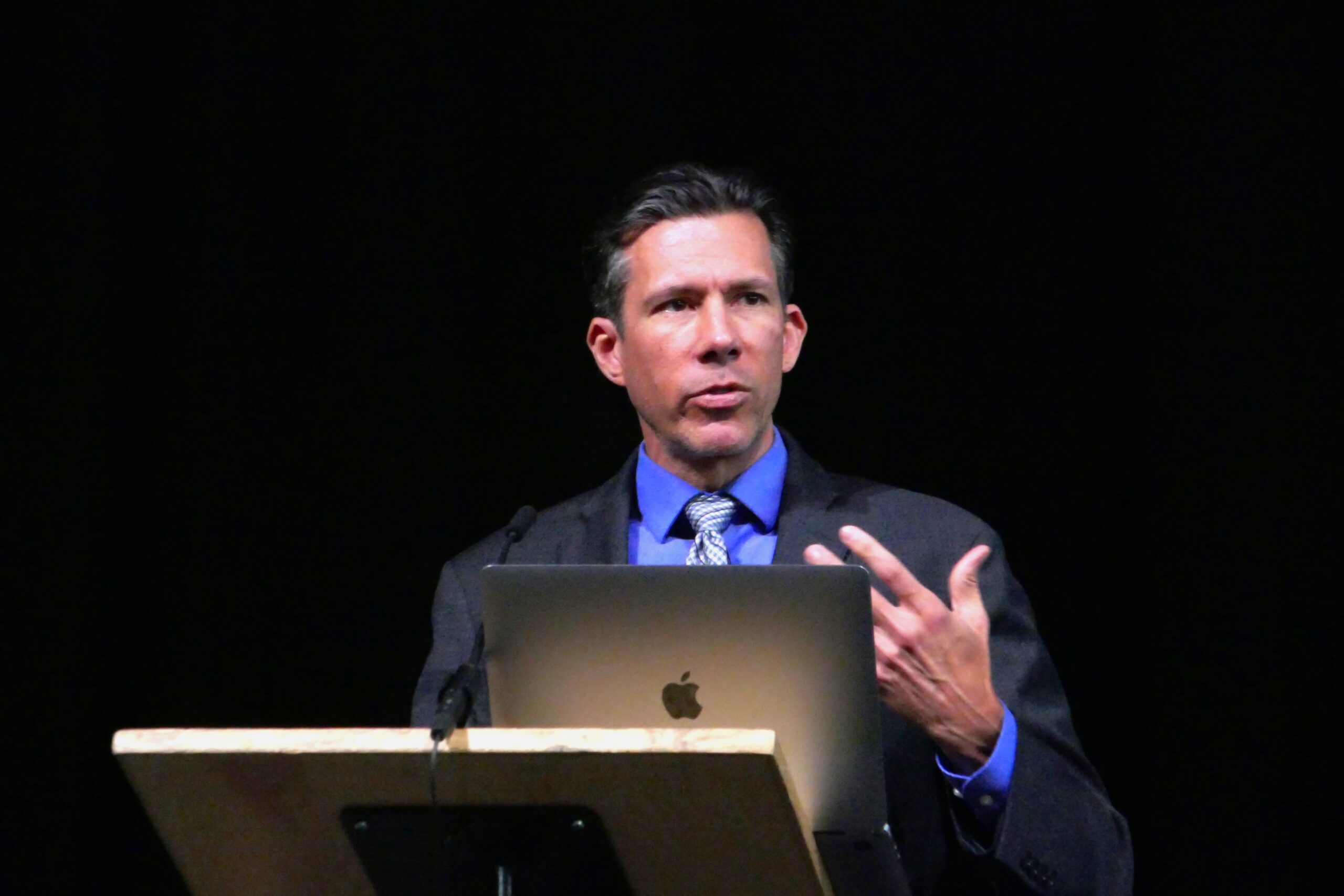
“The resurrection of Christianity is not the point of Christianity. The resurrection of Christendom is not the point of Christianity. Christendom will be resurrected someday when Jesus comes back and he resurrects it. It is not for us to act with his authority right now here, this day before his arrival,” Miller said.
Instead he sees the role of Christians in politics as one shared equitably with all citizens of America in what he defines as a third way forward, which doesn’t include the extremes of Chrisitan nationalism or state-enforced progressive secularism.
Miller said he also rejects the notion that a specific “Anglo-Protestant cultural context” is a mandatory requirement for a flourishing republic.
“The good news is that’s not true. You can look all around the world and see pretty stable, pretty successful democratic regimes in every world,” he said. “I think we can become relaxed that our way of life and government can exist in conditions of cultural pluralism.”
FāVS News uses professional journalists and thoughtful commentary to explore faith, values and ethics. Support journalism like this by making a tax-deductible donation. FāVS is a 501(c)(3) nonprofit. © FāVS News. All rights reserved. Reproduction permitted only to authorized media partners or with written permission.


Thanks for reporting on this, though my hope is that the perspectives offered in this forum will prove completely irrelevant to America’s future. Rigney’s views are particularly repugnant…frightening to think that he is teaches at New St. Andrews!
It’s always interesting, as a secular Jew, to read about Christian folks discussing whether their theology should dictate the laws I have to live by. But I suppose for everyone but Miller in this conversation, pluralism makes no sense as the basis for American laws and public policy. One of many instances of unbridgeable disconnection between two sides in today’s U.S. A question is whether we’re actually a more polarized society than we used to be, or whether fault lines that always existed have simply come to the surface.
Thank you so much, Cassie, for your report on yesterday’s debate sponsored by Doug Wilson! I think you were a courageous reporter even being there. I hope you didn’t get hassled by anyone! Your report was informative, not to mention a bit scary.
By the way, the Ecumenical Ministries of Oregon is hosting a 7-week seminar about Christian Nationalism, Aug. 6-Sept. 17 (all Thursdays). It’s a series put together by the Wisconsin Council of Churches, I believe. Hopefully some FaVS folks might check it out. I plan to.
Peace,
Paul
As usual, Wilson’s history is oversimplified and inaccurate, presented with a bias that reinforces his preconceived opinion.
As for the rest, they simply run into the problem that the founding documents of this country are in opposition to what they advocate. Not only that, but the whole conception of a “nation” is a modern invention about 200 years old. Older conceptions of kingdom and empire may have been brutal, but they were also pretty cosmopolitan compared to nationalist ideas. Whether intentional or not, nationalism is a political dead end and is culturally prejudiced in a harmful way, and can only lead to authoritarianism and cultural stagnancy. And this isn’t even getting into the theological problems with it, which are manifold.