

By Matthew Kincanon | FāVS News Reporter
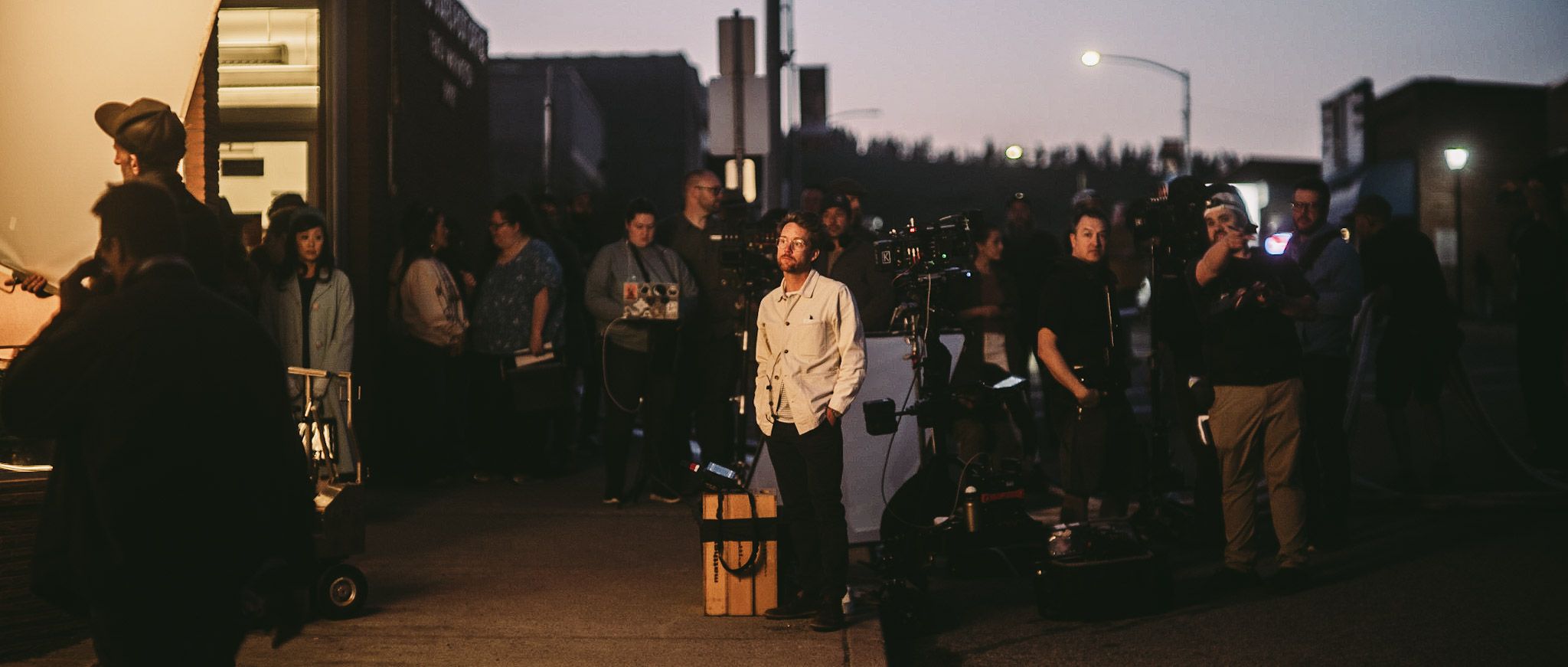
One movie that has received several Oscar nominations this year is “Train Dreams,” which was filmed in several locations throughout Washington state, including Spokane, and has been celebrated for its historical authenticity and has been noted for its ethnic diversity.
The movie tells the story of railroad laborer Robert Grainier (played by Joel Edgerton), his marriage and the events that occurred throughout his journey through life. While the region had little ethnic diversity during the times depicted, Asian American actress Bonni Dichone said the movie quietly insists on the presence of people of color.
“No one made speeches about inclusivity on set, but the intentionality was clear in who was present and who was allowed to exist in that world,” she said.
Importance of inclusion regarding history
In a reflection she wrote about working on the film, Dichone described, given the U.S. population was around 10-11% non-white and less than that in the Inland Northwest, it would be easy for a filmmaker to say there was no need to cast any BIPOC actors and to feel justified in doing so. According to data from the Civil Rights & Labor History Consortium, between 1950-1970, Spokane County was 1-3% non-white.
“When I first received my audition and read the description of ‘Train Dreams,’ I had little hope that I would be involved, simply knowing the world in which it was set,” she wrote in the reflection.
Despite this, the film is not entirely populated by white actors. Several scenes even address the brutality of racism.
One scene is about a Black character named Elijah Brown (played by Branden Lindsay) who searches for and kills a man. After killing him, Brown explains, “That man shot my brother, Martin Brown, in cold blood… He killed him only because of the color of his skin.”
Another scene depicts an act made against a Chinese logger, Fu Sheng (played by Alfred Hsing), who is thrown to his death from a bridge by a group of white workers despite no reason being given. This event, in particular, haunts Grainier in his dreams.
The movie also features Indigenous and Hispanic actors.
Cinematographer Adolpho Veloso, who was nominated for an Oscar for his work on the film, said it was important to tell the stories of BIPOC characters in this time of history because those people were there, even if history and cinema haven’t always shown them.
“Artists play a role in how we perceive history, and the way those stories are told matters,” he said. “Cinema has the power to expand our memory of a place and a time, including those lives that help make memory feel closer to the truth, giving us wider and more accurate perspectives on history.”
The power of one line
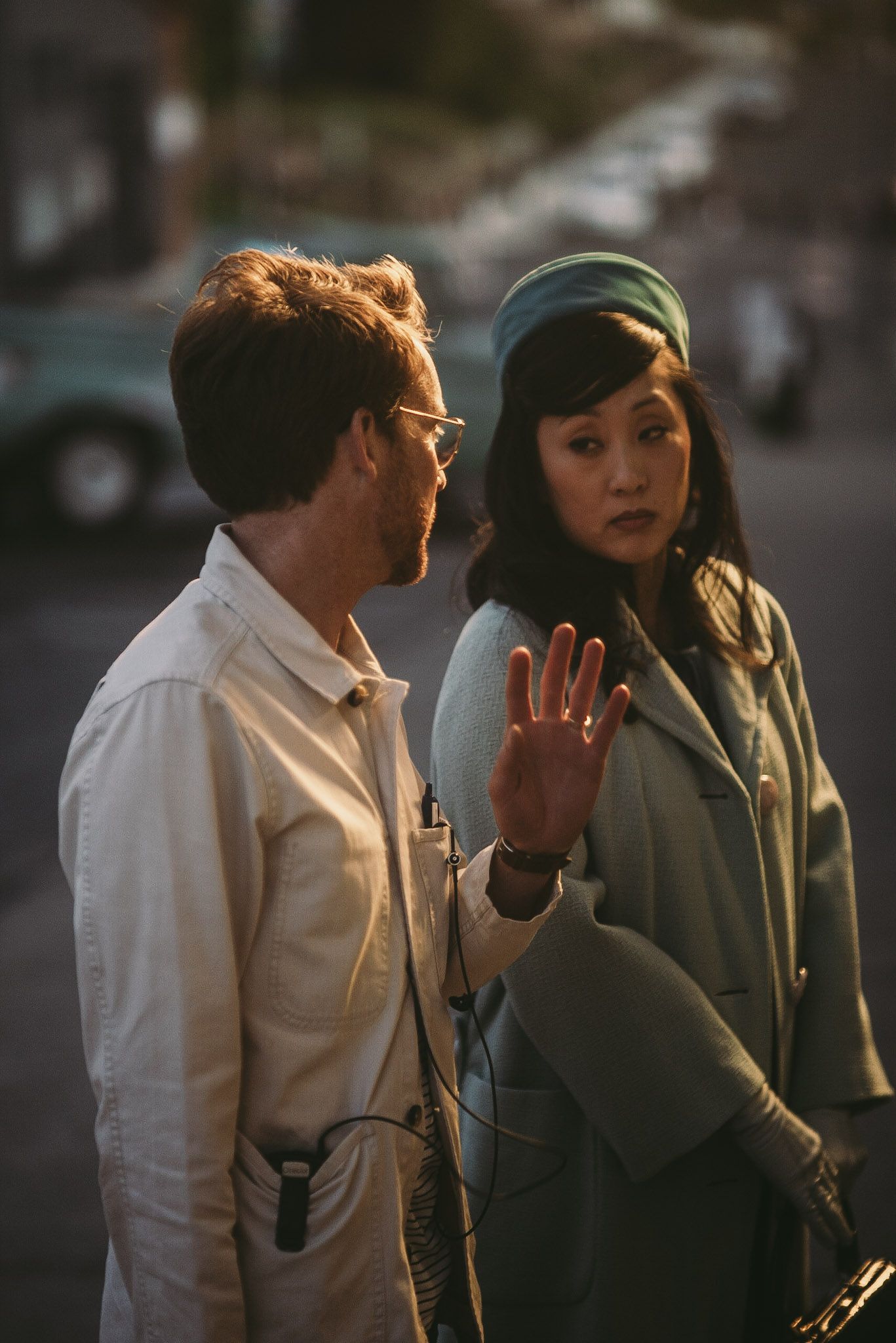
Dichone only had one line in the movie. In her scene, Grainier and her character are standing in front of a storefront window that was selling televisions. At the end of their interaction, an image of the Earth appears and Edgerton’s character asks “Is that…?” and she replies, “That’s us.”
At the end of his long odyssey, Dichone wrote in her reflection that Granier stands before a storefront window and looks into a new world.
“This is a man who has spent his life seeking meaning, trying to make sense of profound loss. In this moment, like many Americans witnessing it for the first time, he sees Earth from space: vast, strange, beautiful,” she said in the reflection. “And in that same glass, a Korean woman stands beside him. She is fashionably dressed, wearing a Jackie Onassis-style pillbox hat, a subtle visual bridge between East and West, past and present, old world and emerging one. It is a quiet nod to the passage of time and to what has evolved.”
In that 30-second scene, Dichone wrote that it helps complete the arc of the film’s central character. In that moment, she wrote, the director chose to place an Asian woman beside him showing that diversity is subtly and exquisitely woven into the final moments of Granier’s odyssey.
Inclusion strengthens themes and storytelling
The presence of BIPOC characters, Dichone said, deepens the film’s emotional truth.
“The story explores isolation, loss and the search for meaning. When people of color are present in that landscape, even briefly, it makes the narrative more honest and more complete,” she said.
Veloso said the themes of the movie are about the passage of time, memory and how lives move through landscapes and history.
“When you allow all people to exist within that world, it reflects the reality that different lives were intersecting in those places, even if they weren’t always centered in the stories that were traditionally told,” he said.
For him, he said this enriches the film because it adds more human texture to the world. It reminds people that history isn’t a single perspective, but encompasses many lives unfolding simultaneously. This, he added, naturally makes the themes of time, change and memory feel broader and more powerful.
“When you bring together people with different backgrounds and life experiences, you naturally bring more perspectives into the process,” he said. “This affects everything, from the way a character is understood to small decisions on set that shape the overall tone of the film.”
For Veloso, filmmaking is always about collaboration. The more voices contributing honestly to the work, the richer the film becomes. He said it also creates a healthier environment on set, where people feel seen and respected and that energy usually translates to the screen.
“In the end, diversity isn’t just a concept, it’s something that genuinely strengthens the creative process and the stories we tell,” he said.
Representation through honesty
Dichone said the movie doesn’t center minorities as a spectacle or moral lesson. It allows them to exist as part of the world of the film and that subtlety makes it powerful.
She described how the presence of Black and Asian characters is framed not as a statement, but as reality and that quiet normalization is meaningful.
“Being a minority in a place with small representation can result in erasure,” she said. “I grew up in that context. When you rarely see yourself reflected, in your community or on screen, it shapes how you understand belonging. Even small moments of visibility matter. They say, ‘You are here. You have always been here.’ Representation matters.”
Veloso has been working with director Clint Bentley since his first film and as a Latino and an immigrant himself, he’s seen how much Bentley genuinely values inclusion and diversity, particularly in key roles behind the camera.
“It’s not something that feels added on, it’s simply part of how he builds a team and tells stories. On Jockey, for example, the main character is Latino and his perspective is central to the film,” he said.
Having people from different backgrounds brings different perspectives and sensitivities into the process, he explained. He said stories are richer and more honest when different voices and experiences are telling them. This applies both in front of the camera and behind it.
“In the end, it just makes the work deeper and the world of the film feel more real, because it’s reflecting the world as it truly is,” he said.
Dichone said Bentley’s approach shows that inclusion doesn’t require rewriting history, only looking at it more fully. If a film set in 1917 logging camps in the Inland Northwest can make space for diverse faces without compromising authenticity, she said other filmmakers can too.
The movie can be watched on Netflix and the 98th Academy Awards will be held on Sunday, March 15.
FāVS News uses professional journalists and thoughtful commentary to explore faith, values and ethics. Support journalism like this by making a tax-deductible donation. FāVS is a 501(c)(3) nonprofit.

