

Sravasti Abbey to host compassion training program open to non-Buddhists
Secular program at Newport monastery draws on Buddhist wisdom and modern science.
By Norah McLaughlin | FāVS News Reporter
Main Points
Sravasti Abbey will offer a four-day Cognitively-Based Compassion Training program April 25-28, teaching participants skills in compassion, awareness and resilience.
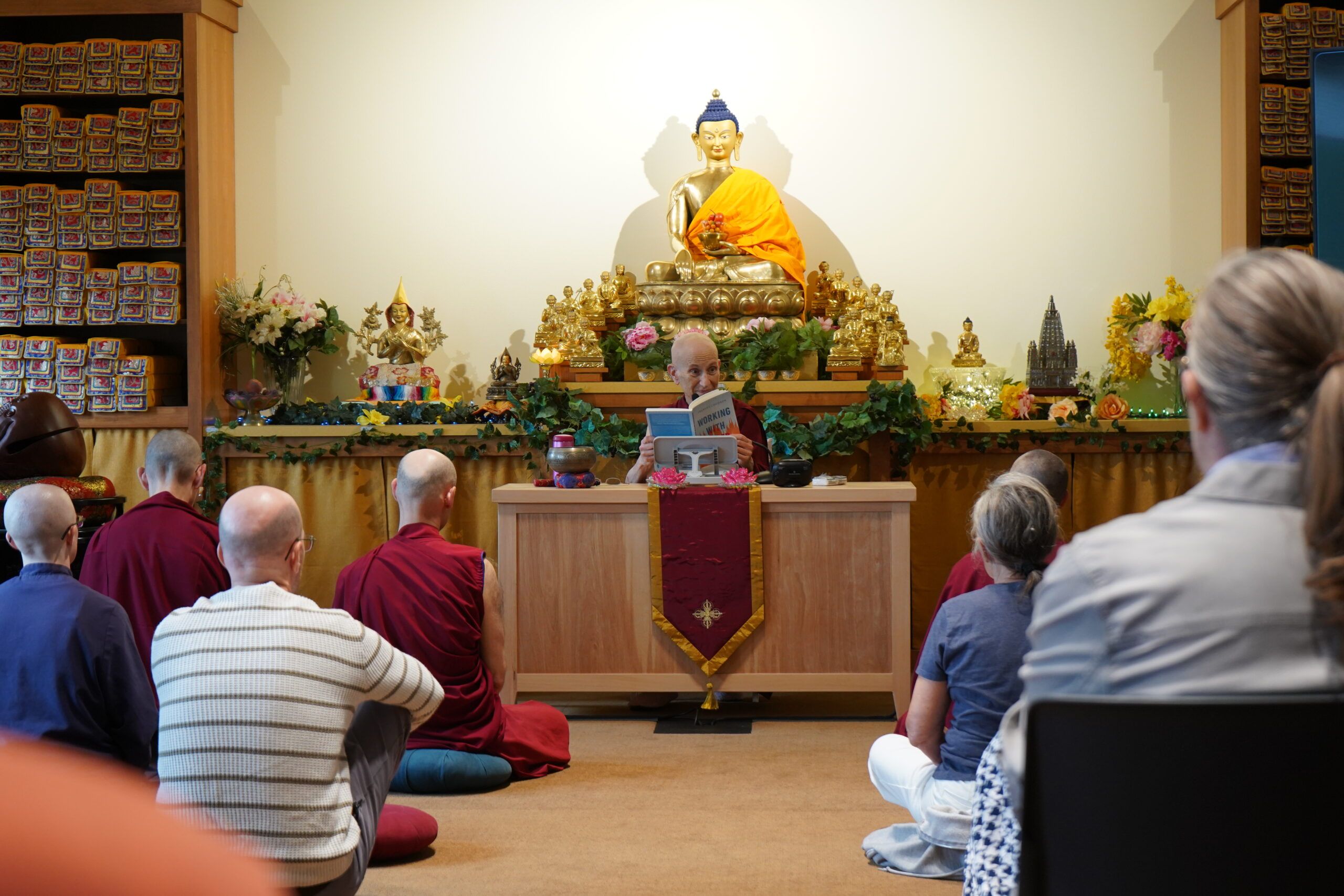
The training is open to the broader community and will be taught as a secular course, though it is hosted by the Buddhist monastery located at 692 Country Lane in Newport, Washington.
“The teaching environment will be very welcoming and comfortable for those who are not of the Buddhist faith,” said Ven. Thubten Lamsel, who has lived at the abbey for 10 years.
Program combines Tibetan Buddhist roots with modern stress research
CBCT combines ancient wisdom traditions with modern science through eight modules, explained Ryder Delaloye, associate director of the Social, Emotional and Ethical Learning Program at Emory University’s Center for Contemplative Science and Compassion-Based Ethics, known as the Emory Compassion Center.
Geshe Lobsang Tenzin Negi, the center’s executive director, created CBCT in 2004 in response to a mental health crisis he observed among students and in response to a call from the Dalai Lama for a secular approach to cultivating basic human values. Now in its third decade, the program has reached thousands of people in more than a dozen countries.
The program is among the most research-based compassion training programs available, Delaloye said. Unlike many programs that rely solely on self-reported surveys, CBCT also tracks biomarkers including adrenaline, cortisol and interleukin-6, a measure of inflammation — all physiological markers of stress response.
“The problem is that a sustained and extended immune response can be a little harmful for the body and can start to break down and tear down things as we respond,” Delaloye said. “So managing stress is a key determinant of managing one’s well-being.”
CBCT defines compassion as “the intention to alleviate the suffering of another with tenderness and care,” Delaloye said.
That concept connects to the Dalai Lama’s vision of universal secular ethics — the idea that all people are naturally oriented toward love and compassion regardless of their beliefs.
Though rooted in Tibetan Buddhism, the program’s teachings translate across traditions, Lamsel said.
“The Buddhist teachings can be distilled down into compassion and wisdom, kind of like two wings of the bird. You need both wings to fly to buddhahood,” she said.
The training helps participants develop empathy, broaden their sense of concern for others and practice attention management, Delaloye said. Past participants have also reported reduced stress, loneliness and symptoms of depression, as well as feeling more focused and grounded.
“When we’re regulated, when we have the qualities and components of resilience, it is much easier to fall into our natural mammalian habit of extending kindness and compassion to others,” Delaloye said.
The course will be led by Myriam Martinez, an Emory-certified CBCT instructor who has taught the program in Colombia and worked with K-12 educators through Emory’s SEE Learning program. Delaloye and Juan Garzon Vergara, a CBCT teacher-in-training and longtime Sravasti Abbey practitioner, will also support the course.
Don’t forget to register!
All monastics at the abbey will participate alongside regional community members. Sessions will be held 9-11 a.m. and 2-4 p.m. daily and will include lectures, discussion groups and pair work. Participants should plan to arrive by 3 p.m. on April 25.
Overnight accommodations at the abbey are available but not required. All abbey programs are freely offered, though a $100 donation is recommended to secure a spot. Registration is required and space is limited.
“Nothing else is really needed, just come in with an open mind,” Lamsel said.
FāVS News uses professional journalists and thoughtful commentary to explore faith, values and ethics. Support journalism like this by making a tax-deductible donation. FāVS is a 501(c)(3) nonprofit. © FāVS News. All rights reserved. Reproduction permitted only to authorized media partners or with written permission.

