

By Cassy Benefield | FāVS News Reporter
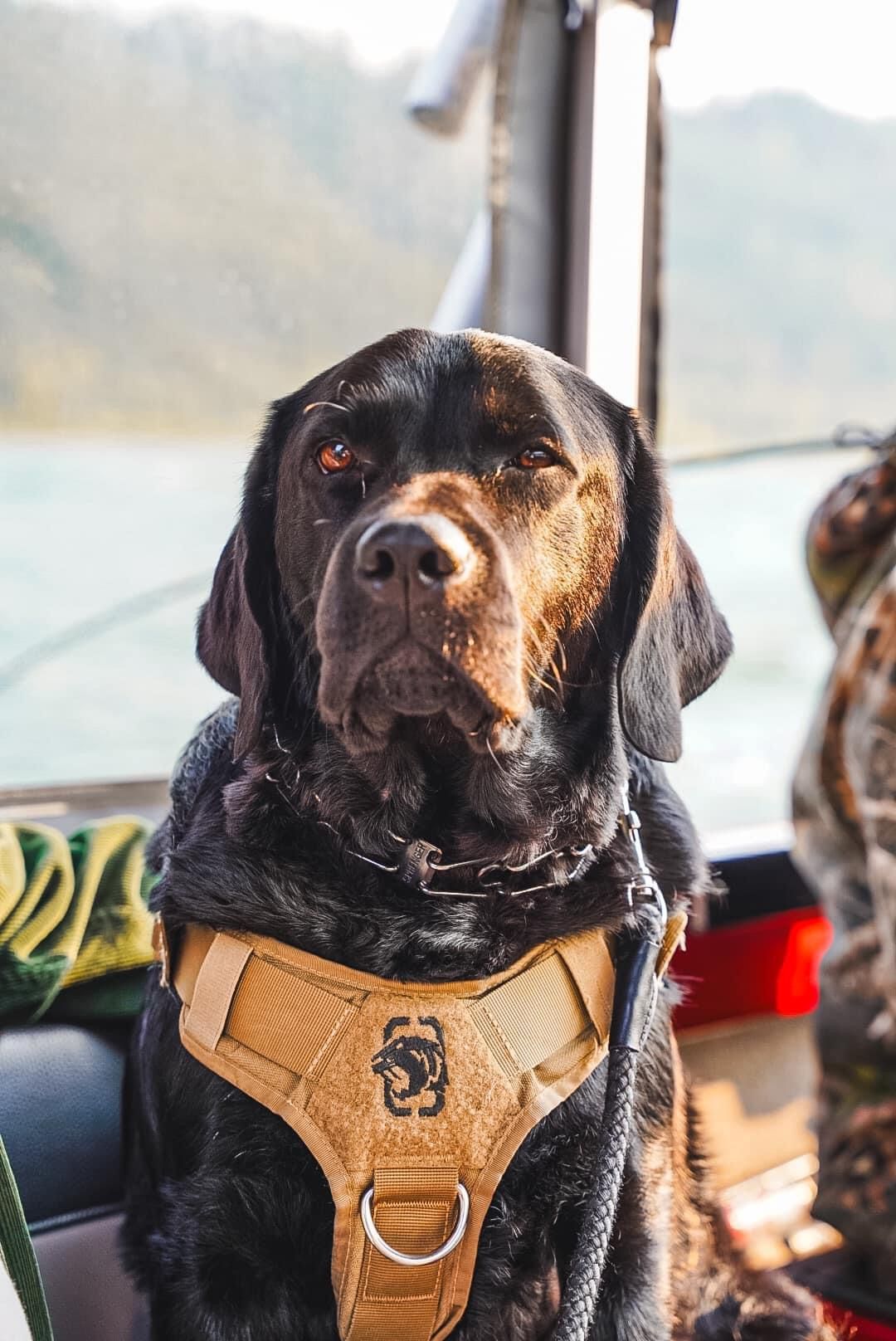
Not all Valentines come on two legs. Air Force veteran Scott Hill’s Valentine came to him as Nikki, an English Black Labrador service dog from Washington-based nonprofit Northwest Battle Buddies (NWBB).
Hill, of Eugene, Oregon, said he instantly connected with Nikki when they met nearly three years ago.
“Immediately Nikki jumped up in my lap, was licking my face. It was a wonderful moment. And, you know, next to my wife, this is my new closest friend,” Hill said in the short film “Nikki: How A Service Dog Can Change A Life.”
Shannon Walker, NWBB CEO and founder, goes further in the same film describing Hill and Nikki’s encounter as “love at first sight.”
“When I first started seeing Scott’s handling skills, I already knew that they were gonna be a great team. And sometimes it doesn’t always go like that,” Walker said.
From the battle field to Battle Ground, WA
Located in Battle Ground, about a half hour north of Portland, NWBB provides professionally-trained service dogs to veterans across the nation battling PTSD.
Studies reveal that veterans paired with a service dog for their PTSD show greater improvements than those who don’t have one. For example, after receiving a service dog, many veterans rely less on counseling and mental health medication for their PTSD.
“It’s such a good natural approach to something that’s really tough and complicated to tackle in the medical world, being PTSD,” Hill said, though he continues general counseling and PTSD medication helps as needed.
On his bad days, Nikki will read a shift in Hill’s mood and crawl his 75 pounds into his lap until Hill feels better, he said.
“Just that pressure, that weight, that amazing concern he shows. He’ll lick my face or my hand and it just dissipates all of that stress and pressure,” Hill said.
The technique is called grounding, and it’s just one of the many skills a trained service dog can provide a veteran 24 hours a day.
Even with this success rate, advocates for service dogs for veterans estimate less than 1% of them will receive one.
‘Theaters of war’
Hill was one of the lucky ones, even though when he first learned about NWBB, he didn’t think his PTSD was bad enough for this type of medical assistance, he said.
He served as an F-15 avionics technician from 1992 to 1996. His job was to take care of all the electronics in the nose and cockpits of those planes. During this time, he served two shorter tours in Saudi Arabia, both of which were “theaters of war,” Hill said.
The first tour was an active, high alert deployment where he helped protect the no-fly zones.
His second assignment included the infamous Khobar Towers bombing that killed 19 members of the service and wounded about 500 others — about 200 yards from where he was sleeping his third day back in the country.
“It was horrendous,” he remembers. “It changed a lot of lives,” he said, including his.
Only it wasn’t until about 2020 when COVID hit and his mom died when his PTSD, something he didn’t yet know he had, became overwhelming.
“I’m a believer, and I think that my faith carried me for many years,” Hill, an ordained Foursquare pastor, said of his Christian belief.
Some time after getting help from the Veteran’s Administration, and realizing his PTSD was “bad enough,” he applied for a service dog through NWBB in 2022. Roughly six months later, in March 2023, he began five weeks of service dog handler training.
Service dogs fill ‘great’ needs
Before a vet even applies for a NWBB, the dogs will train to become a service dog by Walker’s team. The total cost of raising and training a Battle Buddy is around $25,000 for each dog, which the vets do not have to pay.
The need for these dogs is great, Walker said.
Statistics on the survival rates are grim according to the NWBB website. About 1.5 veterans die a day in combat zones. Yet, an average 22 vets a day die by suicide on U.S. soil, losing their battle with PTSD.
“I think one of the greatest misconceptions … is that these people just want their pets with them, this is a luxury. And it’s not. It is a necessity to live life to the fullest and to overcome the symptoms of PTSD,” Walker said in the film “Nikki.”
What separates the dog from any other animal except the horse is dogs have the ability to feel human energies, she told FāVS News.
“It’s about a dog and a human’s compatible energy that brings a bond that surpasses understanding,” Walker said, sharing her personal experience. “The toughest times of my life, hands down, and the greatest moments of my life, except the birth of my twins, I shared with my dog.”
‘God, Family, Country’
Her dad had always taught her that those who serve in the U.S. military are the true heroes, she said. He had fought in the Korean War and her twin sons also served in the military. The adage “God, Family, Country” was a big deal in her home.
Walker began as a dog trainer 30 years ago and is an expert in dog psychology, pack behavior and the human-canine bond. She is also a trainer in Schutzhund (“protection dog” in German) — a European canine sport that tests tracking, obedience and protection skills.

While she said she brings these strengths to NWBB today, which runs cohorts of 10-14 veterans at a time, she believes God brought her NWBB, and they follow Christ’s “example of walking in love.”
They first pour this love into the dogs by nurturing them and caring for them, she said, and it’s “bittersweet” when they leave with their veteran.
While Walker is open about her faith, this is not a requirement to be a part of the program. It’s also something not forced on the veterans.
“They’ve been loved with a love of God. And now they have the love of a dog with them,” she said. “We want them to know the the ultimate healer is a relationship with the Lord.”
‘Last worst day’
With 75 applications open “at all times,” Walker said veterans receive their dogs first come first serve. The veterans who make up these cohorts have served in Vietnam, Iraqi Freedom, Operation Enduring Freedom and in other hostile environments overseas.
These vets experience night terrors, panic attacks, anxiety, etc., that leave them needing more relief than often comes from just medicine and therapy.
“Veterans’ walls come down because of the unconditional love that is the relationship you have with a dog like our service dogs,” Walker said, setting up over 300 Battle Buddy relationships since she founded her nonprofit in 2012.
Walker hopes the day before veterans meet their service dogs is their last worst day.
“And the day they meet their service dog is their best first day,” she said, adding that 97% of veterans who come through the program leave with a service dog.
Having Nikki care for him now for about three years, Hill attests to experiencing better days. He said Nikki has been the key to unlock his emotions to “feel positive feelings again.”
“A battle buddy can save a moment or a life. That’s what I’m experiencing here,” Hill said. “There are moments where I feel like I need help, I need a rescue, and he can do that for me.”
FāVS News uses professional journalists and thoughtful commentary to explore faith, values and ethics. Support journalism like this by making a tax-deductible donation. FāVS is a 501(c)(3) nonprofit.

