
HomeCommentaryViewpoints: How can faith communities help ease racial tensions?

Viewpoints: How can faith communities help ease racial tensions?

Date:

Related stories

A View from the Towers: For Benedictine sisters, summer vacation never includes time off from prayer

A reflection on Benedictine spirituality, summer routines and why prayer remains central to life and service, even during vacation season.

What we get wrong about Satanism — and why it matters

A communication professor explores Satanism, media literacy and why public institutions should apply the same standards to all religious traditions.

65 years later, my childhood baseball glove still catches memories of my father

A columnist reflects on childhood memories, baseball, family and faith after rediscovering the baseball glove his father gave him more than 60 years ago.

Our Sponsors

Reading Time: 3 minutes

Viewpoints is a SpokaneFāVS feature where our writers respond to a weekly question. Readers are invited to participate by posting in the comment section below.

Racial tensions are high across the U.S. right now. A Gallup poll reported earlier this year that 35 percent of Americans are “worried a great deal” about race relations. That number has more than doubled in two years. We put the issue to our writers:

How can faith communities help ease racial tensions?

Elizabeth Backstrom: The church can’t remain silent

Elizabeth Backstrom
Elizabeth Backstrom

Faith communities are powerful sources of social and political capital in our country, and in many countries. We can use this power for good or to disrupt and divide. On the question of race relations, the church cannot afford to remain silent. I believe we must choose to take the sometimes risky step of standing with our brothers and sisters from all races and walks of life, and to stand up for them when they are being oppressed. This can look different for each of us. It can be just listening and acknowledging their issue is real, even if we haven’t experienced it.

This sounds simple but so many folks say this does not happen. It can also be joining protests, calling for changes in legislation, or standing up for people in a situation where they are being bullied. Either way, I believe each of us is called to examine our own attitudes. It is said that no one knows any racists. We never want to see our own blind spots or shortcomings, but we all have them. What are our own biases, and how does this influence the way we treat others?
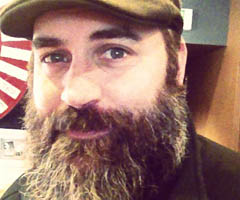
Eric Blauer: We can do these 4 things
Eric Blauer
Eric Blauer

1. Move into a neighborhood where the challenges we are mourning become our experiences more than issues we hear or read about or watch.

2. Make friends or reach out to people of various colors, backgrounds and beliefs.
3. Realize that everyone has a ‘blindspot’ when navigating these matters, so be “quick to listen, slow to speak and slow to get angry.” (James 1:19)
4. Religious communities need to understand, teach and reinforce American values and self-understanding.
Here’s the list of topics I have taught about in our church over the last month:
  • Understanding the differences between pluralism & tolerance:
  • Understand the differences between conviction, conscience, compromise & custom
  • Defining biblical boundaries without compromising biblical values.
  • Upholding biblical truth in the middle of cultural change
  • American Christians should practice piety before politics
  • American Christians should demonstrate care before criticism
  • American Christians should practice justice before judgement
  • American Christians should cherish the gift of separation of church & state
  • American Christians need to understand the difference between a Republic and a Democracy
  • American Christians are called to the ministry of Prophet, Priest & King
St. Augustine said: “You know what God asks us to do? He asks us to be the city of God within the city of man and to love on the city of man and seek its good.”
Readers, we want to hear from you too, but remind you keep the FāVS comment policy in mind: Seek out answers, move the discussion forward, assume the best in others — treat others as you would like to be treated.
Tracy Simmons
Tracy Simmons
Tracy Simmons is an award-winning journalist specializing in religion reporting and digital entrepreneurship. In her approximate 20 years on the religion beat, Simmons has tucked a notepad in her pocket and found some of her favorite stories aboard cargo ships in New Jersey, on a police chase in Albuquerque, in dusty Texas church bell towers, on the streets of New York and in tent cities in Haiti. Simmons has worked as a multimedia journalist for newspapers across New Mexico, Texas, Connecticut and Washington. She is the executive director of FāVS.News, a digital journalism start-up covering religion news and commentary in Spokane, Washington. She also writes for The Spokesman-Review and national publications. She is a Scholarly Associate Professor of Journalism at Washington State University.
0 0 votes
Article Rating
Subscribe
Notify of
guest
0 Comments
Oldest
Newest Most Voted