

By Morgen White | FāVS News Reporter
Listen to audio of this story, produced by Morgen White

After five decades protecting North Idaho’s forests and water, the Kootenai Environmental Alliance has a new focus: making climate change feel local.
Over the past year, KEA has ramped up efforts to translate abstract climate data into terms North Idaho residents can see and act on. The strategy includes publishing local climate impact reports, partnering with the Coeur d’Alene Tribe on environmental education and launching creative community events — including a film series with its next screening Jan. 10.
“After explaining carbon fee and dividend a dozen times only to see people’s eyes roll, I realized, it’s got to be local. People have to see the impacts for it to resonate,” said Dave Muise, KEA board president.

Founded in 1972 and incorporated as a nonprofit in 1974, KEA is Idaho’s oldest nonprofit conservation group. For more than 50 years it has worked to protect the region’s land and water as development pressures increased, challenging illegal timber sales and influencing land-use planning.
Now the organization is focusing on climate conservancy, advocacy and education — and finding new ways to make the case for action.
Local data, local impact
The centerpiece of KEA’s climate education effort is the Coeur d’Alene Climate Adaptation Project, published in May 2024 by KEA’s Climate Action Team. The report documents rising temperatures in Coeur d’Alene at a rate that cannot be explained by natural cycles.
“It can be explained by including human impact on our environment, specifically the burning of fossil fuels, and the resulting increase in greenhouse gas concentrations (GHG) in our atmosphere,” Muise said.
Coeur d’Alene is not an anomaly; globally, the three hottest years on record since temperature tracking began in 1850 are 2024, 2023 and 2025. Kicking 2016 out of the top three.
Climate data can often feel abstract — until its impact is made clear on a local level.
While living in northern California, Muise was introduced to the Citizens’ Climate Lobby, a nonprofit, nonpartisan, grassroots advocacy climate change organization focused on national policies to address the national and global climate crisis. He liked the idea of taking action as a country by putting a tax on carbon emissions. Muise, a former nuclear engineer who spent 30 years in telecom equipment, resonates with climate policy on a national level, and the numbers behind it.
Muise said the Coeur d’Alene Climate Adaptation Project (CCAP) was inspired in part by the idea that people are more likely to change their behavior when they can see the impacts of climate change in their own communities.
The CCAP report specifically looked at the impacts of climate change already occurring in their hometown. The report includes historical data and future projections.
“There are two things that probably resonate the most with people. One is the chart. There’s a temperature chart that has kind of a worst case scenario in red, and then a best case scenario in blue, and then we’re going to end up somewhere in there. Do we know where? No, it just ain’t good no matter what,” Muise said.
The second are the trickle down impacts. Muise said when people hear that the temperature in Coeur d’Alene has risen a couple degrees, most think, “big frickin deal,” but in the CCAP they are faced with the direct impact.
For example, more of the region’s precipitation is falling as rain rather than snow. As snowpack shrinks, runoff comes earlier and rivers and lakes warm, increasing the risk of drought and wildfires and placing added pressure on agriculture. Warmer waters also fuel toxic algae blooms, an issue Coeur d’Alene Lake knows well, while exposing a more unique threat.
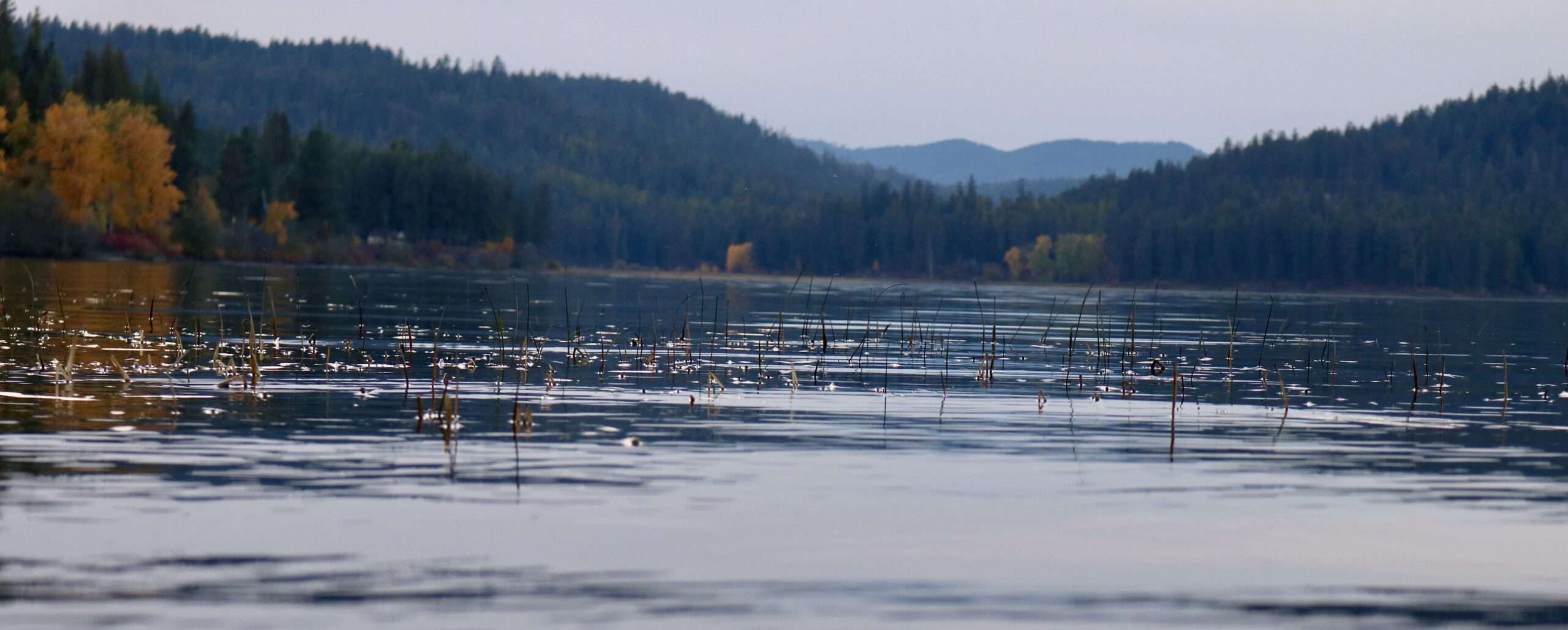
“As oxygen levels drop, heavy metals from legacy mining in lake sediments can go back into solution in the water. Put it all together …hotter summer days; warmer streams, rivers, and lakes; a greater risk of harmful algae blooms; heavy metals in the water; threats to fisheries; and more wildfire smoke — and it all threatens our tourism economy, which drives the local economy,” Muise said.
Muise presented the findings of the CCAP report during the first North Idaho Green Summit in 2024.
“After that, I was invited to join the KEA board,” Muise said.
In their current work they continue to focus on protecting natural resources, climate conservancy, advocacy and education. They’ve put this into practice while collaborating and learning from other local groups.
KEA and the Coeur d’Alene Tribe work together through advocacy
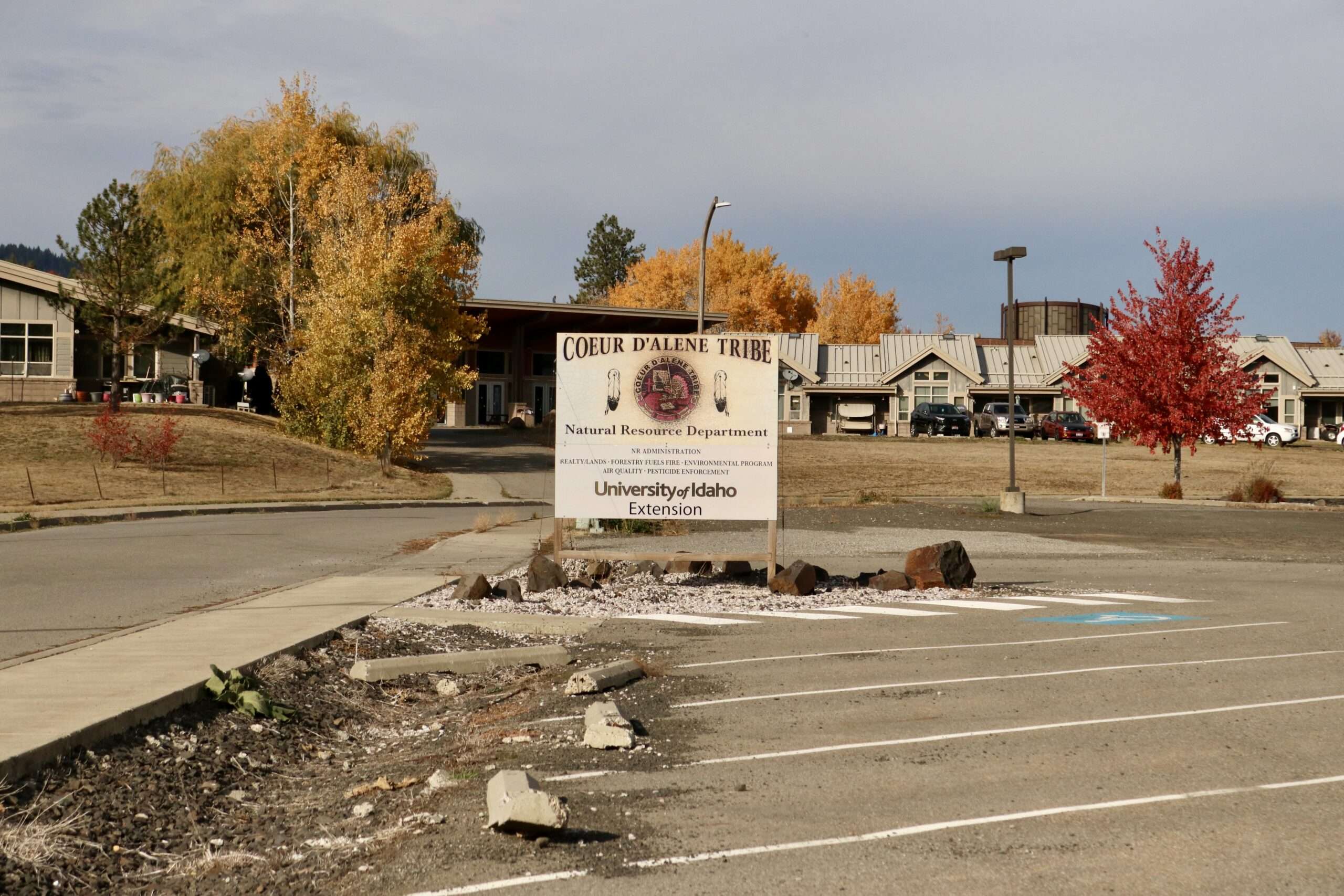
Work between KEA and the Coeur d’Alene Tribe has taken place through education, policy and public outreach events surrounding the environment and more specifically Coeur d’Alene Lake. Caj Matheson, is the natural resources director for the Coeur d’Alene Tribe. He said KEA has been able to help bring in singers and speakers for these joint events.
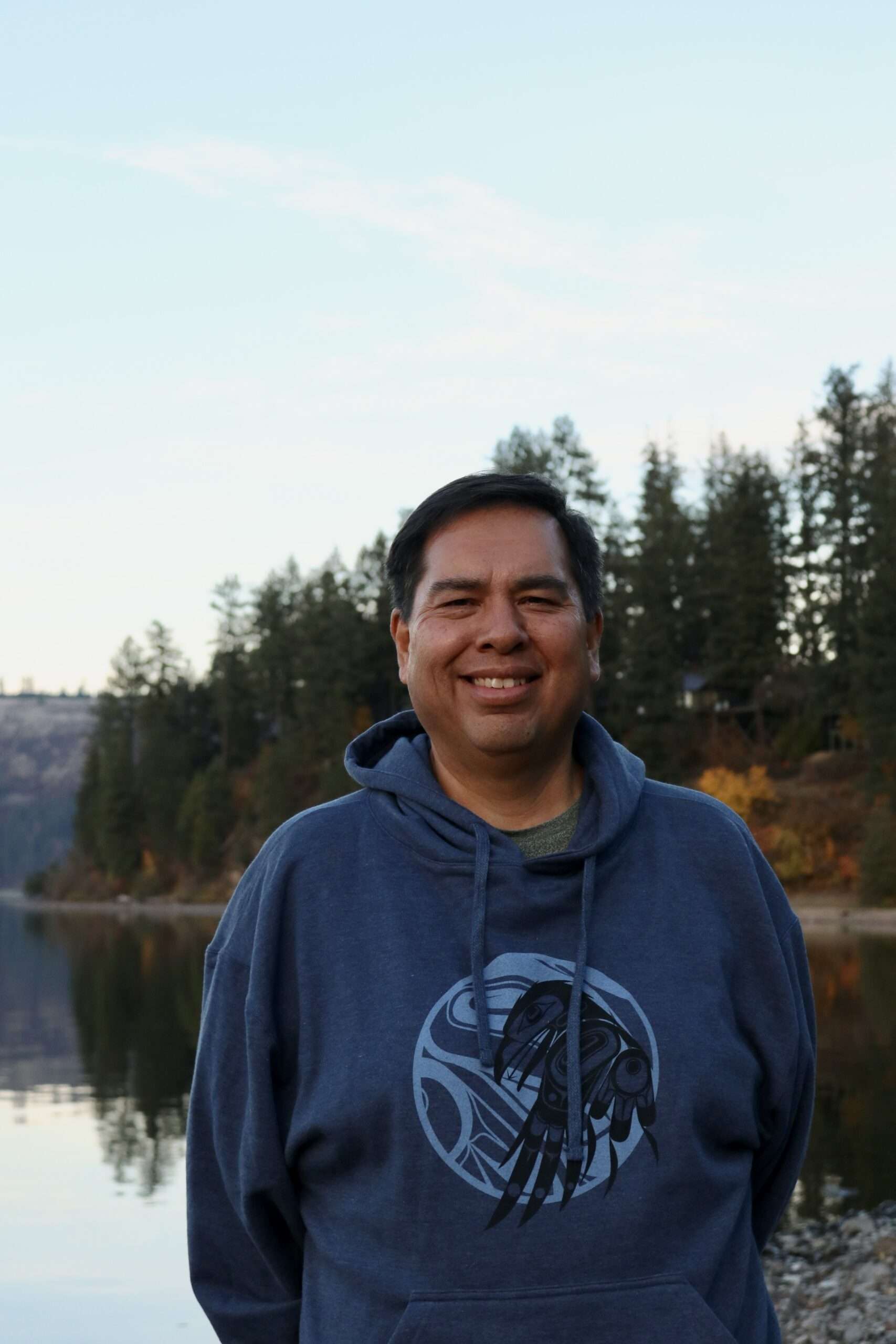
“That’s been really helpful on our side because that is a goal for us, to get our message out there. We want to make sure that our lake and our environment as a whole is protected and taken care of,” Matheson said.
Muise also notes how the collaboration has been helpful to KEA’s Climate Action Team. Muise, and the Climate Action Team drove down to Plummer, Idaho, to learn more about sustainable energy utilized by the Tribe for their senior housing.
“We actually went down to Plummer, Idaho, and visited with Laura Laumatia — she’s involved in climate resiliency — and it was super nice to see right where she works there are solar panels on the roof. What really intrigued me was each apartment had its own heat pump, which is considerably more efficient, providing both heat and air conditioning,” Muise said.
One of KEA’s focuses includes narrowing in on smaller lakes around the region.
“What really is being impacted is the smaller lakes, and KEA is in the process of trying to work with some of the watershed commissions. An issue that we have is watershed commissions are primarily made up of people who own property around a lake. What we don’t have is these associations talking to each other, working together,” Muise said.
Muise said that this work can often be a double-edged sword: bringing awareness to declining lake health.
“Yes, the current homeowners are very aware of it, but do they want to sing it from the rafters? No, because it might affect their property values. So they don’t want to talk about it, or they don’t want to talk about it as much as I would think they would want to,” Muise said.
Despite some resistance, KEA will be kicking off the Small Lakes Commission in the spring.
KEA engages community with creative events
KEA has come up with creative ways to connect with the community. One such event is their annual Junk2Funk fundraising event. It’s a fashion show event where all of the outfits must be at least 80% garbage.

Janet Torline, KEA board vice president, came up with the idea years ago. Due to the COVID-19 pandemic the event was slow to come back, and took a few cancellations before restarting in 2024.
The event is organized by a dedicated committee, which has grown in membership as the event regained momentum post-pandemic. Each year the group selects a distinct event theme. Board Director and Treasurer Cynthia Rozyla is the event’s committee chair and main organizer.

Rozyla said the first year after the pandemic the event resumed, they had to focus on just jumping back in. Then on Oct. 18, 2025, KEA had their second Junk2Funk event post-pandemic. The event’s theme was “The Elements” where artists were asked to focus their works on Air, Fire, Water and Earth.

KEA uses the funding from these events toward the organization’s expenses. This includes conservation initiatives for lakes and forests, educational programs for students and the broader community, organizing events and building partnerships with other regional environmental organizations.
Another event offered for the first time in early November was the Green Screen Series & Eco Film Forum. Three panelists spoke after the film’s completion, one of which was Aiyanna James, climate resilience coordinator for the Coeur d’Alene Tribe.
Muise said he chose a relatively positive film in part because he fears like-minded people who support climate action are discouraged.
“That’s what I want to fight. If I can stop three people from being demoralized, I will feel that it’s been a success.”
The next film series event will feature “Trashed,” a documentary about wasteful human consumerism, its negative impact, and how around the world waste reduction is, and can be, successfully achieved.
The event will take place on Jan. 10 at 2 p.m. in the Community Room at Coeur d’Alene Public Library.
This story was generously funded by a grant from Humanities Washington.

Never miss a story. Get the top headlines, breaking news, commentaries, and handpicked favorites delivered straight to your inbox every morning. Subscribe to our quick, free and informative FāVS News Daily Newsletter.


Awesome story, Morgen! Thank you for sharing the education with us all that is extremely important environmentally.
Thank you Lisa!