

First US-born pope takes the name Pope Leo XIV
News Story by Clemente Lisi | Religion Unplugged
With clouds of white smoke emanating from the chimney atop the Sistine Chapel and to the loud cheers of thousands gathered in St. Peter’s Square, the 133-member conclave elected a new pope on Thursday — choosing Cardinal Robert Prevost.
Following the closed-door process known as the conclave, the new pontiff chose the name Leo XIV as the 267th head of the Catholic Church.
In choosing the Chicago-born Prevost, 69, the cardinals elected the first U.S.-born pope in the 2,000-year history of the Catholic Church.
Speaking in Italian, Spanish and Latin from the loggia, the new pope, head of the world’s 1.4 billion Catholics, said, “Peace be with you.”
Several frontrunners had emerged following the death of Pope Francis, 88, on April 21 — although Prevost, an American missionary who spent his career ministering in Peru, had not been among the names on the many lists that had circulated online.
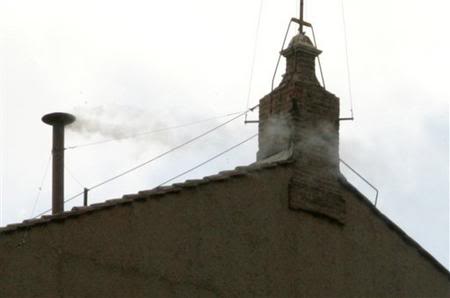
The secret process took just two days following four ballots.
On Wednesday, on the eve of the first day of the conclave, Cardinal Giovanni Battista Re, the 91-year-old dean of the College of Cardinals, presided over a Mass, underlining the need for unity in the church no matter who is made pope.
“Among the tasks of every successor of Peter is that of fostering communion — communion of all Christians with Christ; communion of the bishops with the pope; communion of the bishops among themselves,” he said.
Re called on the College of Cardinals — and the electors who cast ballots — to “maintain the unity of the church.”
“Let us pray that God will grant the church a pope who knows how best to awaken the consciences of all and the moral and spiritual energies in today’s society,” he added, “characterized by great technological progress but which tends to forget God.”
A two-thirds majority was needed — in this case at least 89 votes — to elect a new pope.
Ahead of the conclave, the election of who would be the next bishop of Rome was very much framed as a battle between progressives and traditionalists. Regardless who was elected, this conclave was significant for its size, marking the biggest ever.
The Catholic Church is bigger than one single pope and talk of Francis’ legacy lingered in the weeks following his death as the church found itself at a crossroads.
The Francis papacy was marked by a greater focus on politically progressive issues — migrants, climate change, and LGBTQ rights — that fueled much doctrinal confusion in the process. At the same time, Francis upheld traditional beliefs and was in lockstep with his predecessors Saint Pope John Paul II and Benedict XVI, holding a firm line when it came to issues such as abortion, the need for evangelization and helping the poor.
The church was not immune to the culture wars during Francis’ 12-year pontificate, experiencing deep internal divisions in an ever-polarized world. The conclave to elect a pope was pivotal in determining the church’s future vision, with potential candidates such as Cardinal Luis Antonio Tagle of the Philippines — dubbed “the Asian Francis” — was widely seen as a prelate who would continue in a progressive direction.
In a Wall Steet Journal column, Archbishop Emiritus Charles Chaput argued that the next pope needs to uphold traditional Catholic doctrine, while resisting pressures to conform to secular trends.
“The glue of Catholic identity is what we believe,” he noted. “Creed matters.”
Aside from doctrine, the new pope will have to deal with international diplomacy, the Vatican’s finances and the ongoing clergy sex abuse crisis.
Hours before the conclave’s final vote, the Survivors Network of those Abused by Priests issued an open letter to the new pontiff, urging him to break with what they called “a history of complicity and cover-up and finally deliver justice to victims of rape and sexual abuse in the Catholic Church.”
“Many of the cardinals that elected you covered up the crimes committed against us, and the priests and others who assaulted us hold significantly greater social value and prestige than any of us, individually or collectively,” the letter read. “The theatre and international acclaim that surrounded your election unmistakingly demonstrates this. It is not natural at a time like this to want to know about the kind of sexual and spiritual affliction visited upon us as children.”
Clemente Lisi is the executive editor of Religion Unplugged.


