

By Abbey Rodriguez | FāVS News Reporter
Recovery Dharma Global was founded in 2019 as a grassroots approach to Buddhist healing practices to support people struggling with addiction. Now, Recovery Dharma connects individuals looking for addiction treatment with locally run groups, including in Eastern Washington.
While Alcoholics Anonymous and other 12-step programs emphasize surrender to a higher power as a key tenet of recovery, Recovery Dharma offers a non-theistic approach by following the Buddhist principles of the Four Noble Truths and the Eightfold Path.
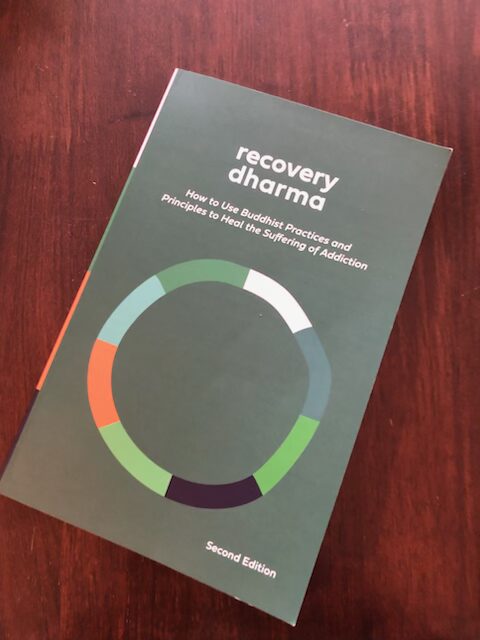
What is Recovery Dharma?
Recovery Dharma does not limit what type of addicts can attend programs.
The program offers recovery from substance addictions as well as process addictions. The Recovery Dharma book lists process addictions as addictions to sex, gambling, pornography, technology, work, codependence, shopping, eating, media, self-harm, lying, stealing and obsessive worry.
The Four Noble Truths aim to acknowledge and end suffering through the Eightfold Path. Recovery Dharma uses these Buddhist principles to “find freedom from repetitive and habitual behavior[s] that cause suffering” the book explains.
Jacob McEwen, a therapist at Alchemy Hillyard, a meeting space for healing, transformation and connection, said that “Recovery Dharma is about understanding why we have these compulsions and cravings and where they come from, and in generating that insight, finding relief and learning how not let that aspect of ourselves [addiction] kind of drive things.”
The program emphasizes holistic healing as opposed to just ending addiction.
“We talk a lot about embodiment as well; not just the mental phenomena of going through healing but also getting in touch with what’s happening inside of you,” McEwen said. “A lot of people who have issues with recovery and substances also have issues kind of sitting in their own body. So that’s something that we get to talk a lot about during those [Recovery Dharma] meetings.”
Nontheistic approach to recovery
Recovery Dharma offers a non-theistic, self-powered approach to recovery that isn’t about religion or even being Buddhist. The program focuses on finding healing within oneself using ancient Buddhist principles rather than seeking healing from a divine power.
One core part of Recovery Dharma is the sangha, which refers to the community.
Julia Hayes, executive director of Soul Center Spokane explained that “All of the negative habits that we have that really inhibit us from connecting to one another, loving one another, and living a life governed by peace, that is what we are endeavoring to shift [to].”
Meeting structure
Because of the grassroots nature of Recovery Dharma, meeting structures and schedules vary by sangha.
Meetings typically include space for meditation, sometimes silent and other times guided, followed by a time of sharing or reflection with the group.
McEwen explained that Recovery Dharma programs at Alchemy Hillyard primarily follow the structure laid out in the Recovery Dharma book.
In contrast, Hayes said Soul Center’s program “select[s], a Buddhist practice or principle, and we study it for the entire month.”
Each sangha also offers different types of attendance options for participants, including online, in-person or hybrid options.
Recovery Dharma in Eastern Washington
Recovery Dharma sanghas meet regularly in both Spokane and Pullman, offering various attendance options for participants.
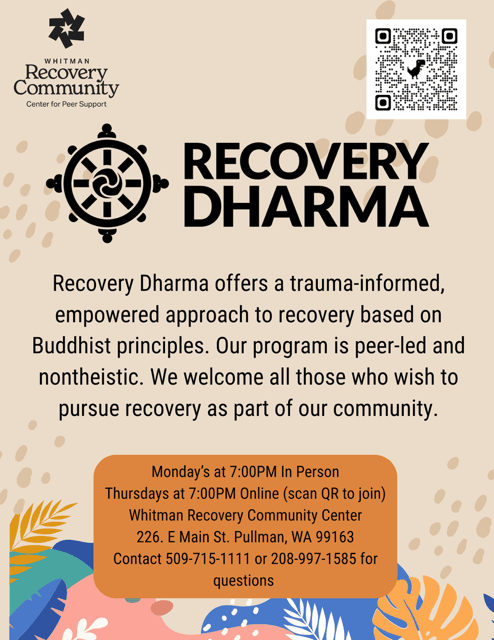
In Pullman, Recovery Dharma meets Mondays at 7 p.m. in person at Whitman Recovery Community Center and Thursdays at 7 p.m. on Zoom. More information is available on the group’s Facebook page.
Recovery Dharma experienced significant growth during the pandemic as in-person meetings shifted to online formats, expanding the reach of local sanghas internationally.
McEwen said Recovery Dharma meetings at Alchemy Hillyard are only in-person and focus on meeting the needs of community members in the neighborhood.
The decision to start Alchemy Hillyard “was very much about choosing a place where we could work with our community, the people that we saw every day growing up, and also, these sort of approaches to recovery, utilizing mindfulness — talking about somatic work, especially in the context of trauma,” McEwen said.
Soul Center hosts Recovery Dharma meetings Monday through Friday.
“We’ve got a really robust online community; so, we do really amazing hybrid meetings” Hayes said. These hybrid meetings are run by two people, one who facilitates the main parts of the meeting and “another person who’s running all the tech. So, we have multiple computers, multiple microphones, multiple cameras, and we have people from all over the world who join us.”
Hayes also created another program, SatiSeva, to help families support loved ones in recovery.
“In 2020 I was inspired by community members to consider creating a mindfulness kind of affinity group, something associated with Recovery Dharma that was specific for family members, people who were in supportive roles, [and are] trying to live with somebody or love someone” in recovery.
Recovery Dharma offers addicts of all types a chance at self-empowered recovery through community support and ancient Buddhist principles.
FāVS News uses professional journalists and thoughtful commentary to explore faith, values and ethics. Support journalism like this by making a tax-deductible donation. FāVS is a 501(c)(3) nonprofit.


This is great news! I know nonbelievers who refuse recovery programs that require a god belief (or something like that)? I think courts need to know about this, too! If the government requires recovery program attendance, there needs to be something that isn’t faith-based for nonbelievers. An atheist won a lawsuit recently in West Virginia.