

By Matthew Kincanon| FāVS News Reporter
In a time when newsrooms have downsized and local journalism has faced uncertainties, an online nonprofit news organization, Salish Current, seeks to inform northwest Washington’s Whatcom, San Juan and Skagit counties on current events without a paywall. It also aims to bring communities together through giving a voice to the people and offering an inside look into life within these three counties.
“We don’t do news for profit,” said Mike Sato, one of the organization’s founders. “We do news for the community.”
Salish Current: Addressing a local news desert
The organization has been around for five years, Sato said, and developed out of a concern over the lack of local news coverage in the area.
Amy Nelson, a co-founder of the organization, said they saw they were living amidst news deserts in nearby counties and wanted to bring some local news back to the population. Journalism has been part of Nelson’s life since her father was a publisher for a weekly newspaper in southwest Washington.
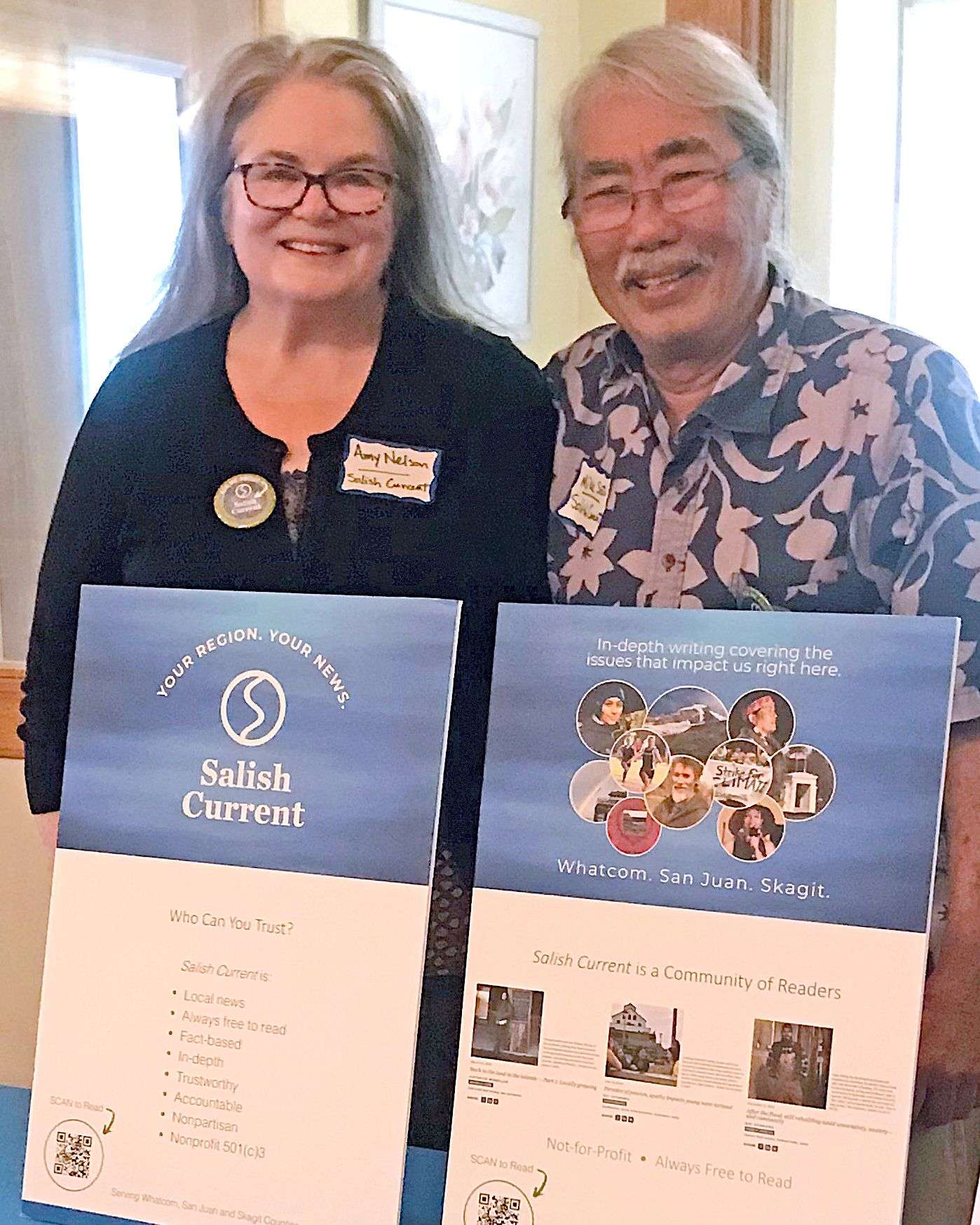
It began, Sato said, with the idea that several things were important: news had to be publicly accessible without a paywall, it had to be community-based and it had to be written according to strict journalism standards.
The name of the organization, he said, originates from the Salish Sea, which stretches from British Columbia to Washington state. The word “current” refers to current affairs as well as the idea of tides always changing and the currents that run through the geographic region.
While they started off by relying on freelancers, Sato said they were finally able to hire an editor, Sam Fletcher, earlier this year who has around 20 active freelancers who cover stories on the environment, social justice and culture, among other important topics.
Right now, they are working on hiring an executive director and making the organization more sustainable.
“We think of ourselves as being unique in being a community organization rather than just simply being a publication business,” Sato said.
Nelson said their organization gets to go more in-depth on certain stories than other outlets and share the stories of people who otherwise would not get them told. She added the local Tribes are an important part of the community and yet there are people who, despite living there for a long time, don’t realize there are several Tribes that live in the region. There are also Hispanic farmers and Croatian communities with backgrounds in commercial fishing.
One of the organization’s board members, she said, described their content as being about what it’s like to live in the region.
“Working in community news in any way is probably one of the most satisfying and fun jobs that there is,” Nelson said. “You get to know a lot of people in the community and there gets to be a dialogue between you as a reporter or editor in terms of what people are concerned about and what they want to hear about.”
Based on what she saw growing up at her father’s newspaper, she described how community news creates bonds and brings people together. In this day and age, she said that’s rare.
Giving space for voices and creating writers
One event of theirs, happening from Sept. 9-18, is the Voices of the Northwest Knowledge Festival. This free, five-part program features experts from the area who will speak about the media, environment, social justice, ethnobotany and Indigenous food systems, artificial intelligence and the music business.
While it’s not news, Sato said its goal is to bring people together and provide an opportunity to delve into knowledge and what’s important to a community.
Another project they are working on is a writer’s lab where they teach people how to write letters to the editor and community voices essays, or how to become citizen journalists.
Community voices articles allow organizations and community members to present ideas and commentary and give them an opportunity to engage in civic conversation.
The importance of nonprofit, nonpartisan news
When it comes to the news industry, Sato said legacy media has been about being a business and the news became the commodity that people sold advertisements around. However, in the last 25 years, that revenue model has deteriorated, resulting in legacy publications going out of business, being bought up by hedge funds, or combined with other outlets. This often results in the newsrooms shrinking.
“There are still good reporters that are doing it, they just don’t have the time or the resources to cover the local news as it was,” he said.
With social media becoming a place where people get information instead of news outlets, Sato said there should be forms of public information that one can rely on as being nonpartisan and done with the high standards of traditional newsrooms.
“The idea that you can have a local publication that did news and was independent, not owned by anybody else but owned by the community in some way that wasn’t governmentally-supported became ideal,” he said.
While nonprofit news organizations like The Guardian have been around for a long time, Nelson said local nonprofit news organizations are a more recent trend and it speaks to how important local news is to people. Trust plays a major role.
“People will support organizations that they trust,” she said. “There’s so much misinformation out there between social media and all kinds of self-serving publications that when you come across something that says, ‘No, we’re supported by you and if you love us you’ll support us, and if we’re not useful to you, you won’t. So, we’re going to work really hard at being useful and relevant.’”
She added it’s important for people to know who runs the organization and that they are there to serve the community and not just make money that’ll be sent back to headquarters and stockholders.
Support for the organization, according to their website, comes from foundations, individual donors, community events, sponsorships and subscribers. Their news judgement is not influenced by donors or any revenue sources, nor do they accept donations from anonymous sources, government entities, political parties, elected officials or candidates seeking public office.
“We believe that knowledge is for the community,” Sato said. “It’s no different than a library, it’s no different than a school, or anything like that. And how the community supports it is very important in keeping it independent. We’re independent, and we’re open access.”


