

By Cassy Benefield | FāVS News Reporter
Audio Story by the Rev. Jason Jones | Spokane Stories Podcast

A government shutdown in the fall, recent cuts in SNAP benefits and rising prices in grocery stores explain why food insecurity is on the rise in Spokane and its surrounding area, and Feed Spokane wants to meet that need by rescuing food that would otherwise be wasted and also damage the atmosphere.
“I can tell you that in Washington State, Eastern Washington accounts for the most food going in the trash,” said Jill Reeves, Spokane’s Education Outreach coordinator for waste reduction programs.
Organic waste that is still good enough to eat eventually turns into methane, which is one of the most powerful greenhouse gases, Reeves added.
From Air Force to food rescue
A different kind of greenhouse-gas-making event inspired Chrystal Ortega, Feed Spokane’s fourth executive director, to dedicate her second career in nonprofit leadership that deals with “food, water, shelter” that is “immediately tactical,” she said. Her first profession was a 22-year career in the U.S. Air Force, which she retired from in 2016.
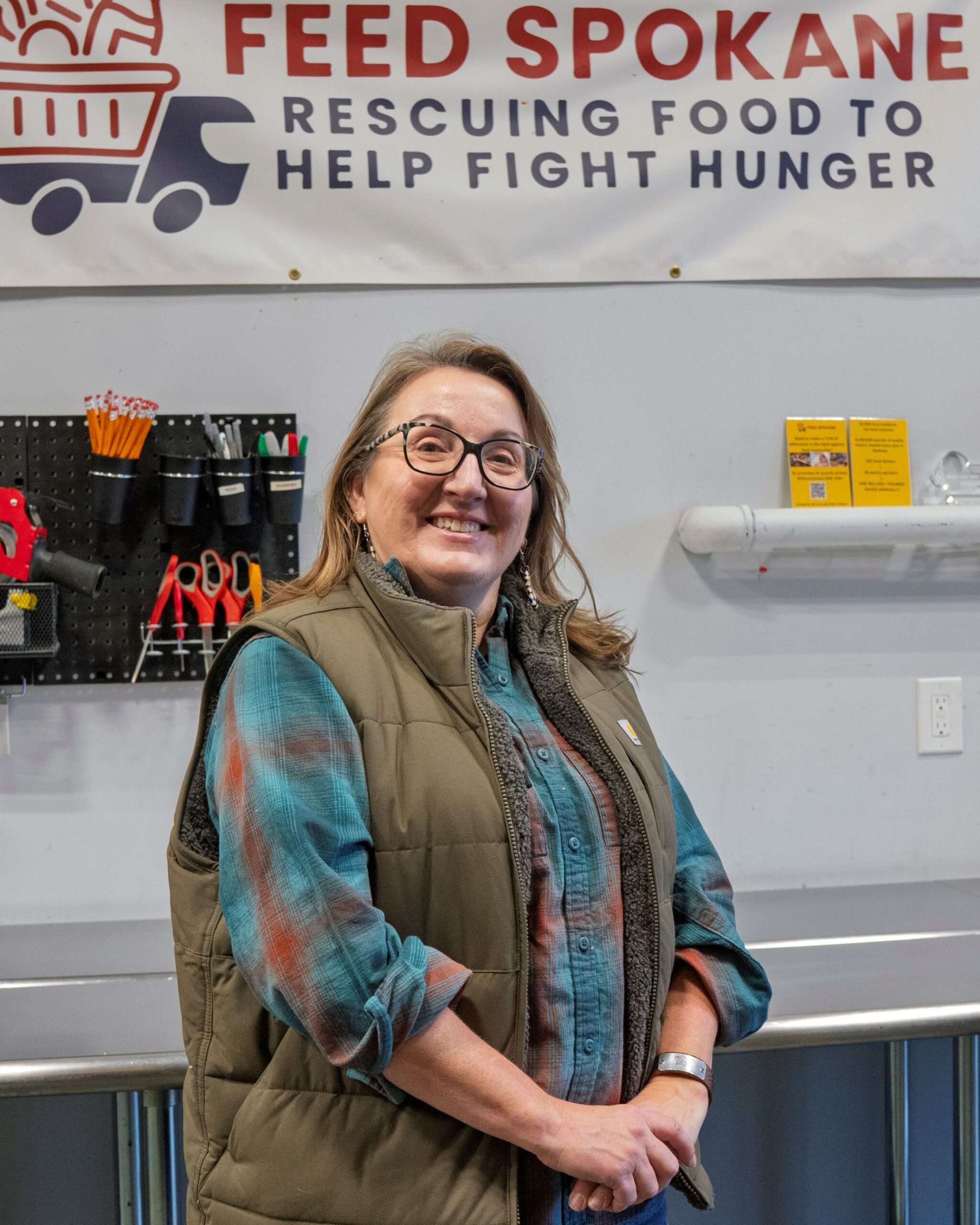
That event was the August 2023 Gray Wildfire that ravaged much of Medical Lake, where she lives, and the surrounding area. She remembers laying in bed thinking about how she was going to address all her needs if the fire took her home.
“And I was like, ‘You can’t think about it all immediately. So, just think about your immediate needs. How will you take care of your immediate needs,’” Ortega said, explaining that’s when she knew she wanted to help others with their basic needs and be someone who could do that immediately. Her home was spared, but her neighborhood was “decimated,” she said.
The hub of food pantries
Leading Feed Spokane, Ortega does not just serve one pantry in one community. Instead she gets to organize 140 volunteers to pick up food from 32 donation sites to then redistribute to 34 pantries every week.
Some weeks extra food needs redistributing, and they are able to serve extra agencies. In 2025, 57 agencies were served.
“I always say we’re the hub of the food pantries,” she said.
The places that give Feed Spokane their unused quality food include restaurants like Longhorn BBQ and Olive Garden, fast food franchises like Papa Murphy’s and Kentucky Fried Chicken and a variety of other places that include Costco, Grocery Outlet, Spokane Indians Avista Stadium and Northern Quest and Spokane Tribe resorts and casinos.

The local Church of Jesus Christ of Latter-day Saints runs a Bishop’s Warehouse, and they will also donate food, as will others in the community who will host non-perishable food drives for Feed Spokane from time to time.
Surprise donations and pumpkin pies
Some of the food comes as a total surprise to Feed Spokane, and these make up about 15% of the food they receive, which would otherwise be tossed. Often these surprises come during the holiday season, which is a treat for people who receive the food, Ortega said.
“I am not exaggerating this when I tell you that two years ago, we rescued nine pallets of pumpkin pie,” Ortega said.
Each pallet had about 100-150 pumpkin pies on them, so the volunteers hustled to pick them up and put them in the freezer for storage until they could be given away.
Other times, she said a huge delivery like that is just “luck of the draw.”
“I had a mom call me maybe about a year ago, and her son was a truck driver. He wanted to go home, but he had a pallet of Chex Mix on the back of his truck,” Ortega said, adding that sometimes a truck driver gets stranded because they can’t go over a snow pass, they get stuck or they miss a deadline. They want to offload their product to someone who can use it so that it doesn’t go to waste.
One million pounds and counting
Feed Spokane has rescued about one million pounds of food a year for the last five years. As of Dec. 9, they have rescued 1,017,389 pounds. That’s roughly equivalent to 254 average-sized passenger cars or 78 African elephants. They estimate, though, they’re only rescuing 10% of the quality food that is thrown away.
‘In it before it was popular’
The Arby’s franchise in Spokane, which runs the four independent restaurants in town, has been with Feed Spokane from its inception. The partners of the company were part of the team who founded the faith-based organization in 2005 along with other hospitality industry leaders.
Jerry Pedersen, director of operations and a current Feed Spokane board member, remembers restaurant owners and managers discussing throwing out all this food when “more could be done about it to help hungry people,” he said.
“That’s when [Feed Spokane] began,” Pedersen said. “We were in it (food rescue and redistribution) before it was popular.”
He estimates his four Arby’s donate 120 to 150 pounds of mainly chicken products a week to Feed Spokane and gives them at least $100,000 a year in grants, fundraising food costs and rescued food.
Pedersen said his franchise considers it “a no-brainer for us,” and admits they “are one small cog in the food donation part.”
Beyond the ‘pantry model’
Youth for Christ Spokane (YFC) is just one of the 34 pantry sites that receives Feed Spokane’s redistributed food like Arby’s donations every week. Although, they go beyond a pantry model of giving boxes of food to the youth, ages 11-19, to whom they minister daily.
YFC will also feed them using ingredients from the average 400-800 pounds of food they are likely to receive on a given week.
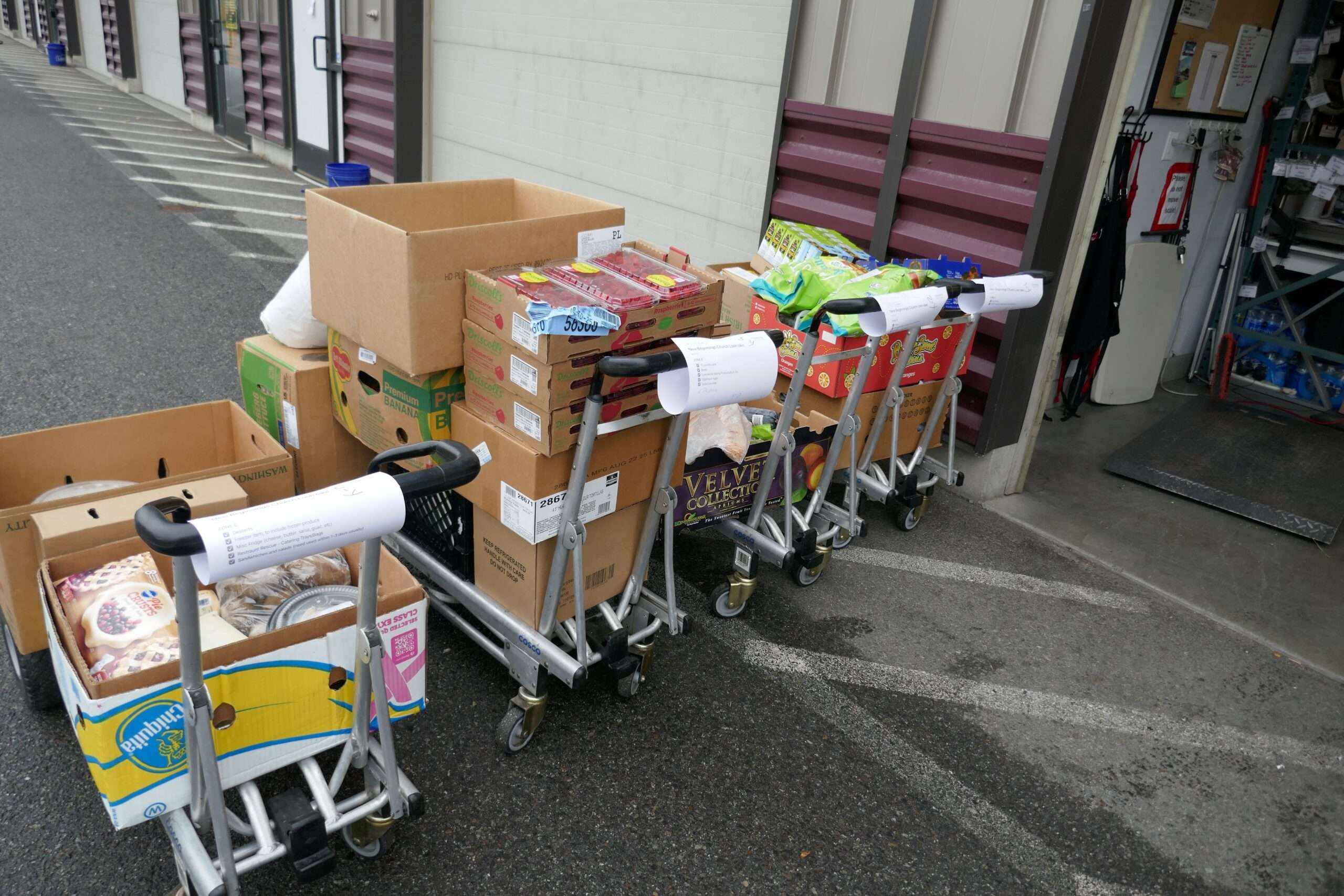
YFC has a commercial kitchen and uses the donated food to prepare daily meals for the youth, as they are one of the few YFCs to be open daily. They also run food workshops for students. The food rescued from restaurants often includes items like fried chicken, baked beans and macaroni and cheese.
The food also teaches the youth how to eat nutritiously by introducing them to the variety of foods they are given from Feed Spokane, and it has opened the door to meet the students’ families.
“It’s allowed us to meet their families because all of a sudden the families are like, ‘Who are these people giving us enough food for our entire family, not just our students?'” said Kevin Illidge, YFC executive director.
He called the partnership with Feed Spokane “instrumental in addressing a huge part of the insidious nature of poverty,” noting that because of these donations, his ministry is able to put more money toward programming, where in the past they have had to pay for food.
Illidge estimates YFC in Spokane ministers to about 1,000 students a year, and this doesn’t include their families.
Serving small towns
Small-town pantries also get a hand-up from Feed Spokane weekly. Their service area extends far beyond Spokane into Grant, Stevens, Pend Oreille and Lincoln counties.
One couple — the wife, Patricia Curran, 78, and her husband, 82, have been married for 59 years and drive 80 miles one way because the need is so great in Addy, Washington, where they live. Curran said after taking care of their morning farm chores, they volunteer to pick up Feed Spokane’s weekly allotment of food for Addy Rescue Mission.
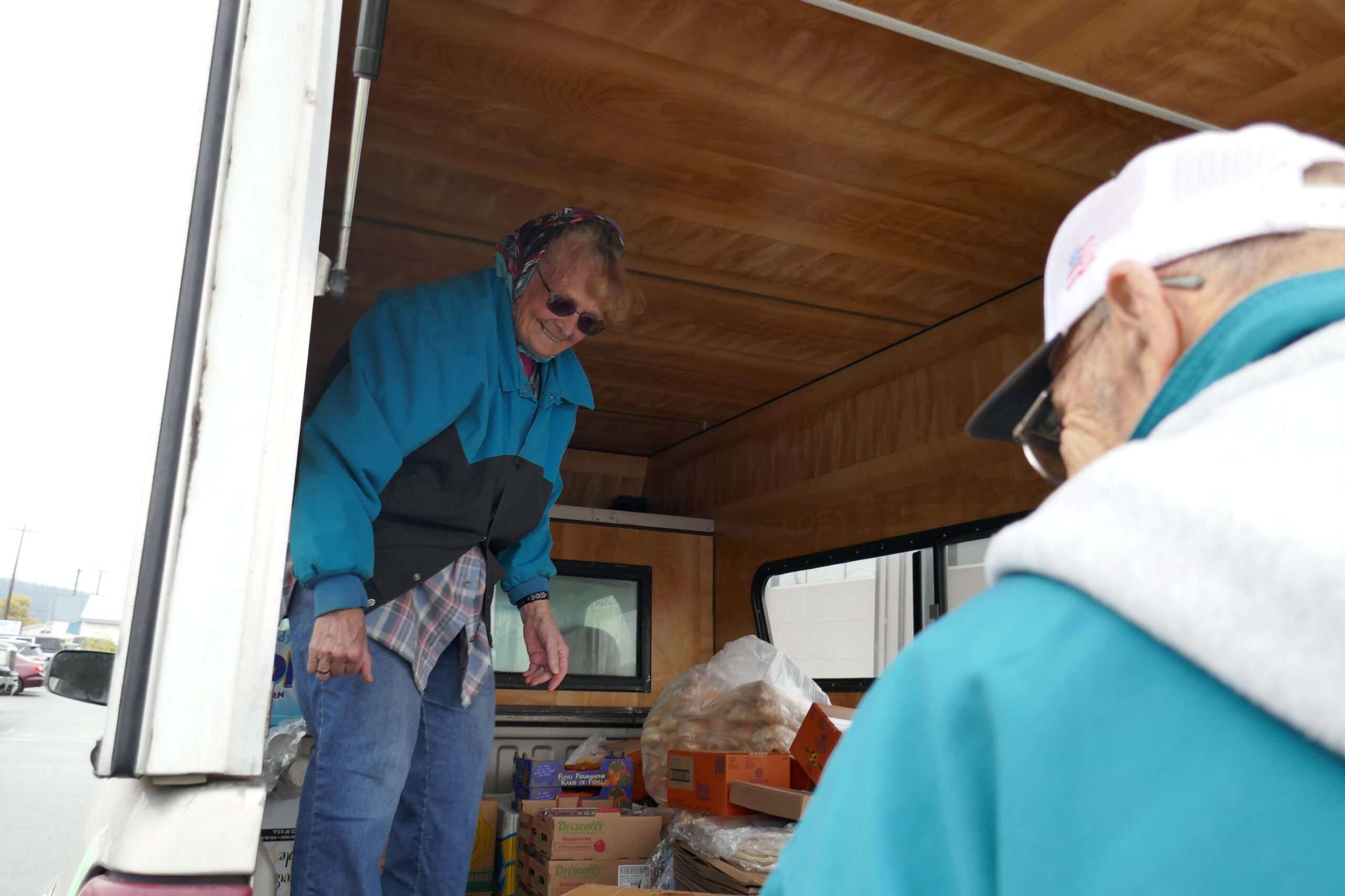
On food distribution day, which happens every Tuesday from 10:30 a.m. to 12:30 p.m., the Currans’ truck is one of the many vehicles lined up outside waiting to be called for their turn to come to the opening doors of the warehouse and receive the food volunteers have chosen for them that week.
While Addy may be a small town, 265 at the 2010 census count, likely smaller today, the area is widespread with many kinds of people served by its food bank, Curran said.
“There’s people that come, like one guy, he is real stoved up with arthritis and stuff like that, and he comes,” she said. “There’s elderly people that can’t get out, and they’ll take food to them.”
Food as part of addiction recovery
Back in Spokane, Marsha Valenzuela is glad no one turned her away based on the way she looked when she needed help. She is also glad food was a big part of her recovery from drug addiction.
A local peer support specialist today, Valenzuela arrives on distribution days and picks up food for the nonprofit she works for, which helps others with their addictions.
“Marsha was a heroin addict,” Ortega said. “She went through rehab one time successfully — one time. And when I asked her why, she said because wraparound services included housing and food. And I’m like, ‘You are the poster child of success in overcoming addiction!’”
Valenzuela admits though she couldn’t have done it without services, support and food, and other addicts need the same care.
“It’s (food) feeding the immediate need. Yes. But not the long-term need,” Valenzuela said. “So you want to find those organizations that can feed the long-term needs and … help feed those immediate needs to bring them in.”
She also said food plays a key role in decision-making for addicts. The protein especially aids people because “it helps our brain work better and make better decisions,” she added.
Growing pains and future dreams
Ortega says she receives a “profound” sense of fulfillment working for Feed Spokane and watching it play healing roles in many lives, rescue food and play a small role in decreasing greenhouse gases.
“I can’t imagine doing something different because there’s this joy in the unknown,” she said. “I never know what a day is going to look like. And there’s kind of some fun in that.”
But what amazes her the most are her volunteers. She has seen the volunteers increase over 300% since she’s been on the job, with 40 applications currently in process waiting to be fit into the system.
“We need a bigger facility. We’re in a really small, tiny, …warehouse, but it’s really, I would say, a lofted garage,” Ortega said. “I have more volunteers than I can put into [that] space.”
Ortega dreams of a bigger space, but she doesn’t believe it will happen “anytime soon,” as the nonprofit is working hard to stabilize their funding.
“We have our funding cemented for a year, which has never been the case,” Ortega said.
Right now, she said due to the space constraints, they focus, instead, on being “faster on how we give away food.”

This means when they have an abundance of food taking up space, she has several organizations ready to receive the surplus in order to make room for what’s needed for food distribution days.
They are a phone call away, and so is the rescued food her volunteers will pick up tomorrow.
This story was generously funded by a grant from Humanities Washington.

Never miss a story. Get the top headlines, breaking news, commentaries, and handpicked favorites delivered straight to your inbox every morning. Subscribe to our quick, free and informative FāVS News Daily Newsletter.


