

by Morgan White | FāVS News Reporter
The Spokane Buddhist Temple will hold its annual Obon Summer Festival on Sunday, July 20, from 1p.m. to 7p.m., and invites the public to take part in the day’s events. The festivities will take place at 927 S. Perry St. in Spokane as well as in Grant Park, which is across the street.
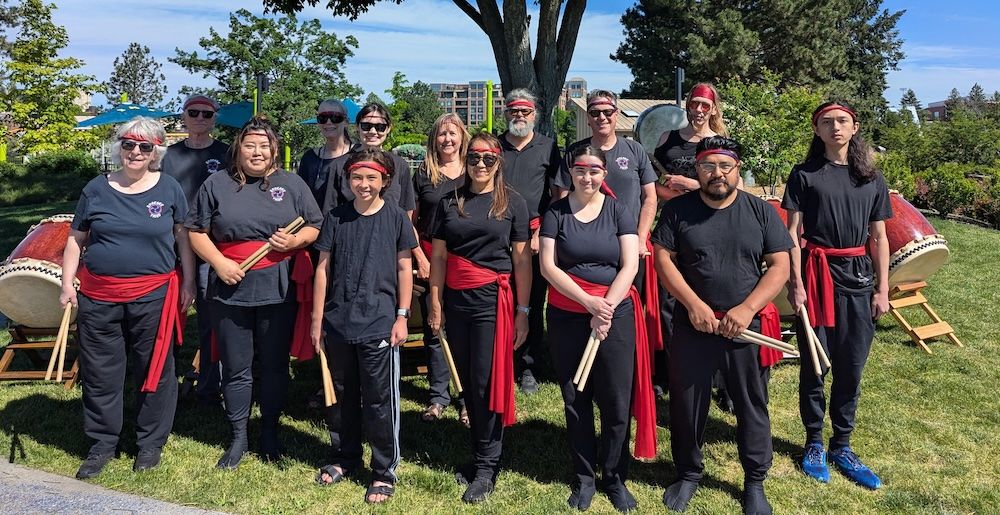
Obon is a Japanese Buddhist festival that honors ancestors through gratitude, reflection and joyful remembrance. Celebrated in Japan for more than 500 years, Obon traditionally includes Bon Odori dancing and Taiko drumming, both of which will be featured at the Spokane Buddhist Temple’s upcoming event.
Services at the temple are conducted by volunteer minister assistants under the supervision of The Rev. Cynthia Yasaki. Amanda Goodwin, a minister assistant since 2019, said Obon is the best time to come if you are an outsider to Buddhism.
“Because it’s not just talking about Buddha necessarily” she said. “There’s a lot of Japanese cultural things like the dancing and drumming, and it’s really to remember all of our ancestors.”
The festival will kick off with arts, crafts and music.
“Eleven to 1 p.m.is our setting up time, so that our tables will be ready by 1 p.m. The art event for the public is from 1 to 4 p.m., so that customers can come to purchase our products,” said artist Harumi Norasakkunkit. She has been selling her art at the festival for three years. Norasakkunkit paints animals using traditional Japanese black ink called Sumi.
“Sometimes the customers request a custom-made painting, like their pets, animals, families. So I can do that. I also do pencil portraits for like 10 minutes, quick sketches. And I do name writing in Japanese. Sometimes on the paper. Sometimes on a stone,” she said.
While Norasakkunkit said her paintings aren’t specifically tied to Obon or Buddhism, it reminds her of her Japanese culture.
“I learned Sumi more like calligraphy when I was a child,” she said. “So using Sumi brings back memories from my childhood.”
Obon’s origin story
The origin story of the holiday traces back to Maudgalyāyana, one of Buddha’s closest disciples, who used his supernatural powers to search for his deceased mother to find where she had ended up.
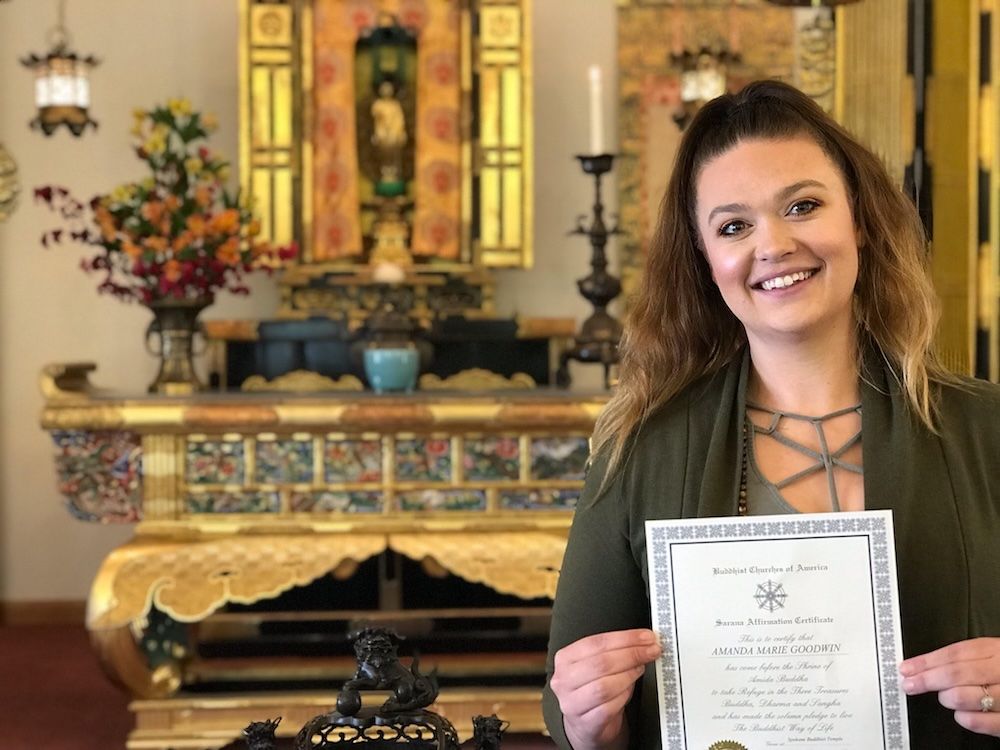
“In Buddhism, you can live multiple lives and in multiple realms. Maudgalyāyana could think and see where his mom was, and his mom had been reborn in the realm of hungry ghosts. Maudgalyāyana was kind of shocked that his mom ended up there because of her karmic causes and conditions, and he asked the Buddha what he could do to make her situation better. And the Buddha told him to make offerings to monks,” Goodwin said.
After Maudgalyāyana did what the Buddha said, his mom was released from the realm of hungry ghosts. Maudgalyāyana was so happy that he started dancing with joy.
“That’s where the tradition of dancing for Obon comes from, and we’re dancing with joy and with gratitude of our ancestors,” Goodwin said.
Bon Odori: Dancing with ancestors
When Izumi Pierce dances Bon Odori at the Obon festival she dances for her brother.
“It is said that the ancestors are dancing with you when you’re dancing,” Pierce said.
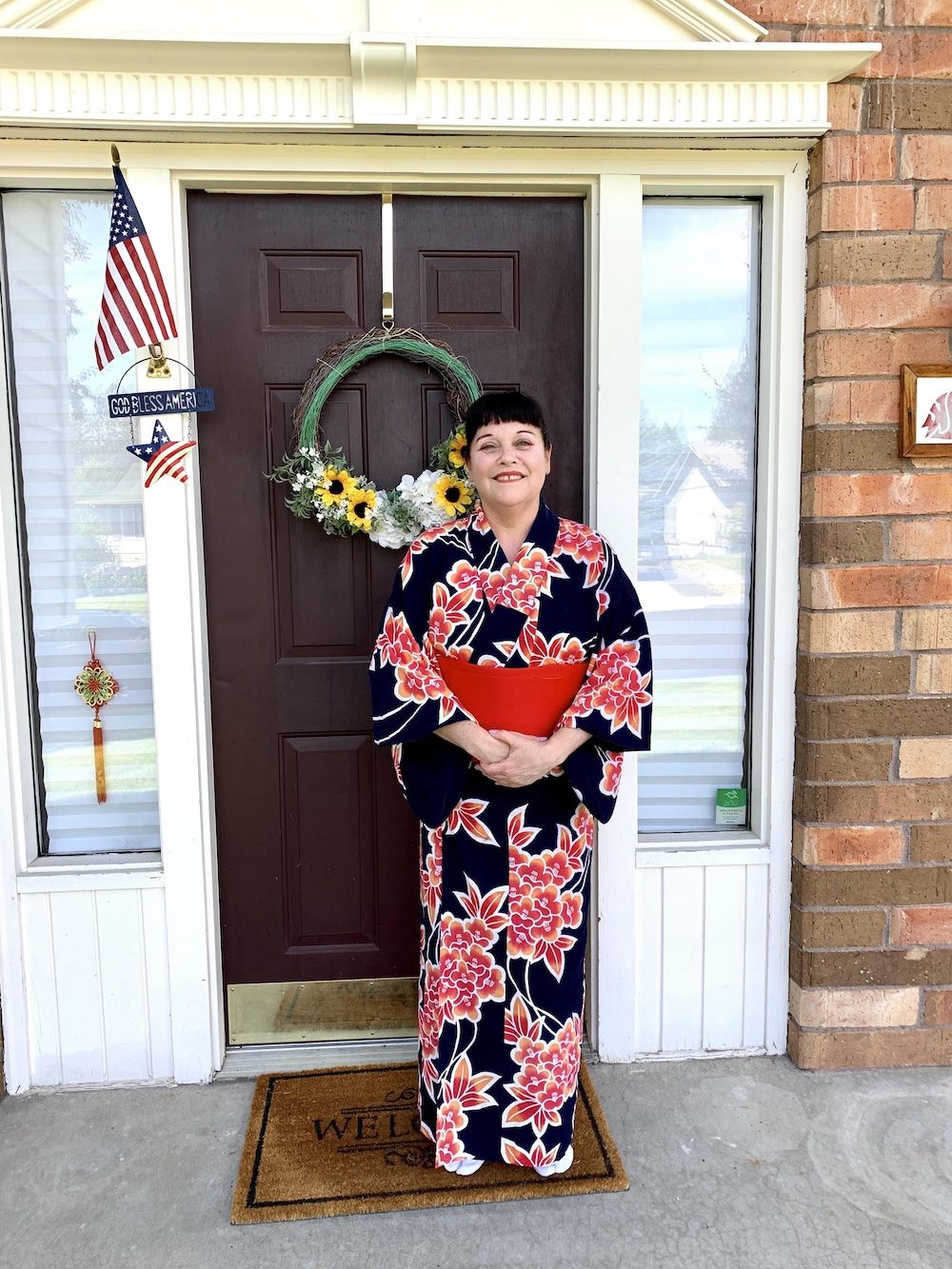
Pierce didn’t know much about Buddhism when her brother passed away, but he had requested a Buddhist service. This led Pierce to her first Obon festival in 1996 at a temple in West Los Angeles.
“It had a great meaning to me at the time, and so I wanted to dance for my brother,” she said. Then I started learning from them, and I fell in love with Japanese dance.”
Pierce continued to dance, and learned Nihon-Buyo. She studied with a highly-respected Japanese dance group called Wakayagi, which is one of several groups in Japan that has been teaching students for over 100 years.
After moving to Spokane in 2016, Pierce wanted to continue dancing but found that the Spokane Buddhist Temple no longer had a dance instructor. So she became one.
“When I got here, they were happy because we could have a festival again. And so we’ve been doing them ever since,” Pierce said.
In 2019, she was asked to take an exam by her sensei and passed.
“They sent me my Natori, it’s like a diploma, and that gave me a name. That’s how I earned the name Izumi, She said.”
Pierce said that when you graduate, they choose a Japanese name for you because a part of the tradition’s rule is to teach with your dance name.
For Pierce, Obon is a balance of the past with the present.
“I’m remembering what has gone, what has passed. I’m remembering those loved ones. I’m celebrating their lives by dancing for them, and they are dancing with me spiritually,” she said. “And then, on the other hand, I’m spending quality time with my family and my friends and people that I’ve met along the way who are here now, and we are celebrating our lives together and meeting new people,” Pierce said.
Schedule
1 p.m. — Arts, Crafts & Music
4 p.m. — Shin Buddhist Service
4:30 p.m. — Karate Demonstration
5:00 p.m. — Spokane Taiko
5:30 p.m. — Bon Odori Dancing
All proceeds from the event help support the all-volunteer Spokane Buddhist Temple.



I appreciate the cultural look, Morgan. Love the ritual of dancing with joy for passed relatives–honoring them in spirit, heart.